
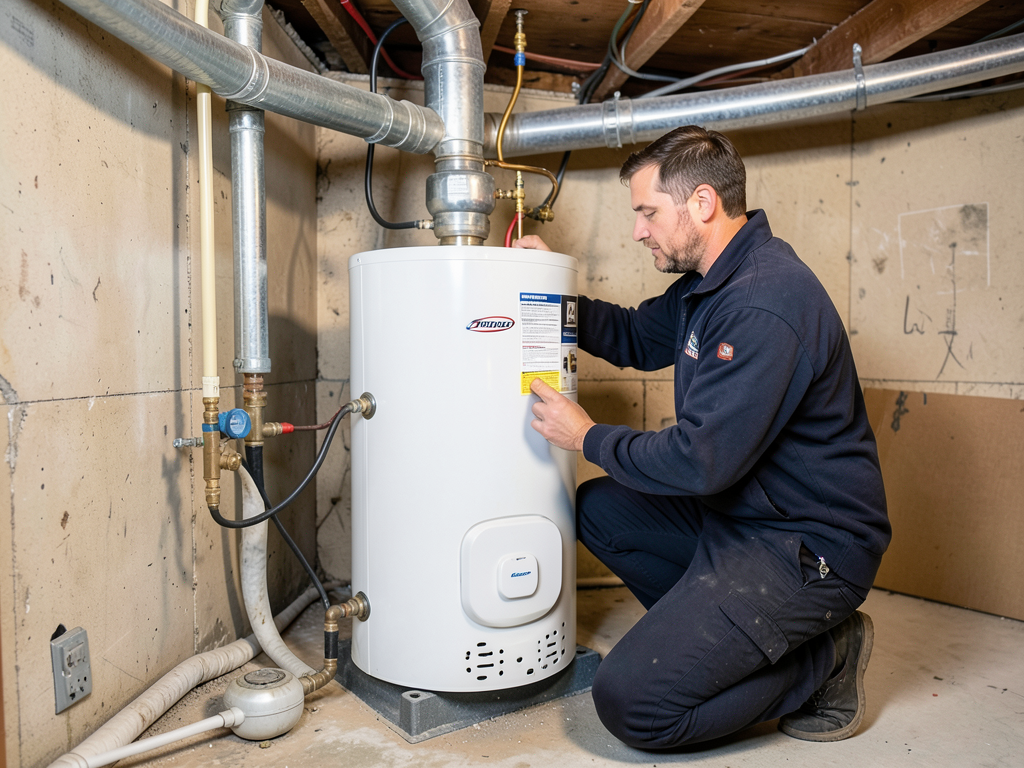
Comparing Gas and Electric Water Heaters for Your New Fishers Home
Choosing between a gas and electric water heater for your new Fishers home requires understanding local utility costs, performance needs, and water quality challenges. Hamilton County’s hard water and seasonal Indiana temperatures create unique considerations that affect efficiency, lifespan, and operating costs. This guide breaks down everything you need to know to make the right choice for your family’s hot water needs. Hamilton County building permit requirements.
Gas Water Heaters: Performance and Utility Costs in Hamilton County
Gas water heaters deliver faster recovery rates and lower operating costs in Fishers due to CenterPoint Energy’s competitive natural gas pricing. A typical 50-gallon gas unit recovers 40-50 gallons per hour, making it ideal for homes with multiple bathrooms or high hot water demand. The initial installation costs more than electric models because they require proper venting and gas line connections. Energy Star certified water heaters.
Gas units work exceptionally well during Fishers’ cold winters when electric resistance heating becomes less efficient. The combustion process generates consistent heat regardless of ambient temperature. However, Hamilton County’s hard water causes mineral buildup on gas burners, reducing efficiency over time. Annual maintenance including burner cleaning and anode rod inspection becomes essential to maintain performance. Benefits of Water Softeners.
Atmospheric venting remains the most common installation method in Fishers homes, but power-vented models offer greater flexibility for finished basements where traditional chimneys aren’t available. The key advantage: gas water heaters typically cost 30-50% less to operate annually compared to electric models in Indiana. Reliable Sump Pump Installation in Fishers to Keep Your Basement Dry.
Electric Water Heaters: Efficiency and Installation Simplification
Electric water heaters offer simpler installation and zero emissions at the point of use, making them attractive for new construction in Fishers. Standard electric units recover 20-25 gallons per hour, while heat pump models can achieve 50-60 gallons per hour using significantly less energy. The higher upfront cost of heat pump technology pays off through reduced electricity consumption over time.
Electric units eliminate combustion concerns and venting requirements, freeing up valuable space in Fishers’ popular two-story floor plans. They work well with smart home systems and can be programmed for off-peak operation when Duke Energy rates drop during nighttime hours. The absence of a pilot light also means no wasted energy keeping a flame burning continuously.
However, electric resistance heating struggles during extreme cold snaps when Indiana temperatures drop below freezing. Recovery times increase significantly, and homes with high hot water usage may experience shortages during peak demand periods. The lack of combustion also means no backup hot water during power outages unless you invest in a generator system.
The Fishers Factor: How Local Water Hardness Affects Lifespan
Hamilton County’s water hardness levels average 18-22 grains per gallon, one of the highest in central Indiana. This mineral-rich water creates specific challenges for both gas and electric water heaters. In electric units, calcium and magnesium deposits coat heating elements, reducing efficiency by up to 30% within two years. Gas burners experience similar scaling that forces the system to work harder to maintain temperature.
Hard water also accelerates anode rod consumption, a critical component that protects your tank from corrosion. In Fishers’ water conditions, standard magnesium rods last only 18-24 months instead of the typical 3-5 years. This means more frequent maintenance visits and earlier tank replacement if you don’t install a water softener system.
Water softeners can extend your water heater’s life by 5-7 years in Fishers, but they add another layer of complexity and cost to your plumbing system. The softened water prevents scale buildup but requires regular salt replenishment and occasional resin bed cleaning. Many Fishers homeowners find the reduced maintenance and energy savings worth the investment. Apartment Complex Plumbing.
Cost Comparison: Upfront Investment vs. Monthly Energy Bills
Gas water heaters typically cost $1,200-$1,800 installed in Fishers, while electric models range from $800-$1,400. Heat pump water heaters push the price to $1,800-$2,800 but offer the best long-term efficiency. Installation complexity drives much of this price difference – gas units require proper venting, gas line sizing, and combustion air calculations per Indiana mechanical code.
Monthly operating costs vary significantly based on your home’s hot water usage patterns. A family of four using 60-80 gallons daily might spend $25-$35 monthly on gas versus $40-$60 on electric resistance heating. Heat pump models can reduce that electric cost to $20-$30 monthly, making them competitive with gas over time.
Energy Star certified units qualify for federal tax credits through 2026, offering up to $300 back on qualifying gas or electric models. Duke Energy also provides Smart $aver rebates for heat pump water heaters, potentially adding another $400-$500 in savings. These incentives can significantly offset the higher upfront costs of efficient models.
| Feature | Gas Water Heater | Electric Water Heater |
|---|---|---|
| Average Recovery Rate | 40-50 gallons/hour | 20-25 gallons/hour |
| Typical Installation Cost | $1,200-$1,800 | $800-$1,400 |
| Monthly Operating Cost* | $25-$35 | $40-$60 |
| Expected Lifespan | 8-12 years | 6-10 years |
| Venting Requirements | Required | None |
| Backup During Outage | No | No (unless generator) |
*Based on Hamilton County utility rates and average family usage
Code Compliance: Fishers Building Permits for Water Heater Replacement
Replacing a water heater in Fishers requires a mechanical permit from Hamilton County, costing $75-$125 depending on the scope of work. Gas installations must comply with Indiana Mechanical Code Section 1301, which mandates proper venting, combustion air supply, and earthquake strapping for units over 40 gallons. Electric installations follow National Electrical Code Article 422 requirements for dedicated circuits and proper grounding.
Thermal expansion tanks become mandatory when installing new water heaters on closed plumbing systems, a common scenario in Fishers’ newer homes with pressure-reducing valves. These tanks prevent dangerous pressure buildup that can damage your plumbing and void manufacturer warranties. The cost of adding an expansion tank ranges from $150-$250 installed.
Permit inspections verify proper temperature and pressure relief valve installation, correct gas line sizing, and adequate clearance around the unit. Skipping permits can result in fines up to $500 and complications when selling your home. Licensed plumbers handle permit acquisition and ensure all work meets current Fishers and Hamilton County standards.
Heat Pump Water Heaters: The Hybrid Alternative
Heat pump water heaters represent the most significant advancement in residential water heating technology for Fishers homes. These units extract heat from surrounding air using refrigeration technology, consuming 60-70% less electricity than standard electric models. In Fishers’ climate, they perform exceptionally well in unconditioned spaces like basements where they also provide minor dehumidification benefits.
The technology works best when ambient temperatures stay between 40-90°F, making them perfect for Indiana’s seasonal variations. During extremely cold periods, they switch to standard electric resistance heating as a backup, ensuring consistent performance year-round. The initial investment of $1,800-$2,800 typically pays for itself within 3-5 years through energy savings.
Heat pump units require more vertical clearance than standard water heaters – typically 7-8 feet of ceiling height minimum. This makes them ideal for Fishers’ popular ranch-style homes with tall basements but challenging for some two-story layouts with utility closets. The units also produce cooling effects in the surrounding area, which can be beneficial in summer but may require supplemental heating in winter.
Recovery Rate Performance for Large Family Homes
Recovery rate becomes critical when choosing water heaters for Fishers’ larger homes, where multiple bathrooms and simultaneous hot water usage are common. A family of five might use 80-100 gallons during morning rush hour, requiring a unit that can replenish that supply quickly. Gas water heaters excel here, with 50-gallon models recovering enough hot water for continuous showers. Quick Garbage Disposal Repair in Lawrence to Get Your Kitchen Back in Order.
Electric resistance units struggle with high-demand scenarios, often requiring 80-gallon tanks to meet the same usage patterns. This increases both upfront costs and operating expenses significantly. Heat pump models bridge this gap, with 50-gallon units performing comparably to 80-gallon electric resistance tanks while using less energy.
Consider your home’s peak usage patterns when selecting capacity. A household with teenagers who take long showers back-to-back needs different specifications than a retired couple who use hot water primarily for dishes and laundry. Many Fishers families benefit from tankless water heaters for point-of-use applications like master bathrooms, supplementing their main tank unit.
Hard Water Maintenance and Anode Rod Replacement Cycles
Hard water creates a maintenance cycle that affects all water heater types in Fishers. Every six months, you should flush your tank to remove sediment buildup, a process that takes 2-3 hours and requires shutting off water and power. This maintenance extends your unit’s life but adds to the total cost of ownership.
Anode rods protect your tank from internal corrosion by sacrificing themselves to mineral buildup. In Fishers’ hard water, these rods deteriorate twice as fast as in areas with softer water. Checking and replacing them annually costs $100-$150 per service but prevents premature tank failure that could cost $1,000-$1,500 to replace.
Some Fishers homeowners install powered anode rods that use electrical current instead of sacrificial metal. These systems cost $200-$300 upfront but last the lifetime of the water heater and work better in hard water conditions. The technology represents a significant advancement for areas like Hamilton County where traditional anode rods require constant replacement.
Venting Requirements for Gas Units in Finished Basements
Modern Fishers homes often feature finished basements where traditional chimney venting isn’t possible. Power-vented gas water heaters solve this problem by using a fan to push exhaust through PVC pipes that can run horizontally to exterior walls. This flexibility allows installation in utility closets or mechanical rooms without major structural modifications.
Direct-vent models offer another solution, drawing combustion air from outside through a separate pipe while exhausting through another. This sealed combustion system improves efficiency and eliminates concerns about backdrafting in tightly sealed homes. Both options cost $200-$400 more than atmospheric venting but provide essential flexibility for modern home designs.
Vent pipe sizing becomes critical based on the unit’s BTU input and the total vent length. Undersized vents cause poor draft and potential carbon monoxide risks, while oversized vents can lead to condensation and corrosion. Professional calculation of these factors ensures safe, efficient operation and compliance with Indiana mechanical codes.
Local Permit and Inspection Process in Hamilton County
Hamilton County’s permit process for water heater replacement involves submitting detailed installation plans that specify unit location, venting configuration, and electrical or gas connections. The county reviews these plans within 24-48 hours, then issues permits valid for 180 days. Most Fishers plumbers handle this paperwork as part of their service, but understanding the timeline helps with project planning.
Inspections occur in two phases for gas installations: rough-in inspection before the unit is connected, and final inspection after completion. Electric installations typically require only a final inspection. Missing the final inspection deadline can result in permit expiration and the need to restart the process, adding delays and costs.
The inspection process verifies critical safety features including proper temperature and pressure relief valve operation, correct gas line sizing per NFPA 54 standards, and adequate combustion air supply. Inspectors also check that seismic strapping meets current requirements, even though Indiana experiences minimal earthquake activity. This thoroughness ensures long-term safety and code compliance.
Lifespan Expectations in the Indiana Climate
Water heaters in Fishers typically last 6-12 years, with gas units generally outlasting electric models by 2-3 years. The Indiana climate affects this through seasonal temperature swings that cause tank expansion and contraction, accelerating metal fatigue. Units in unconditioned spaces like garages or outdoor closets may see even shorter lifespans due to extreme temperature exposure.
Hard water remains the primary factor reducing lifespan in Hamilton County. Tanks in areas with water hardness above 15 grains per gallon often fail at the 6-8 year mark due to internal corrosion and sediment damage. Water softeners can add 3-5 years to this timeline, making them a worthwhile investment for long-term homeowners.
Manufacturing quality also plays a significant role in longevity. Units with commercial-grade glass lining and thicker steel tanks consistently outlast budget models. While the initial cost difference might be $200-$300, the extended lifespan and improved efficiency often justify the investment for Fishers homeowners planning to stay in their homes long-term.
Making the Right Choice for Your Fishers Home
Your decision between gas and electric water heaters should balance upfront costs, operating expenses, and your home’s specific needs. Gas units offer lower operating costs and faster recovery, making them ideal for large families or homes with high hot water demand. Electric models provide simpler installation and zero emissions, suiting smaller households or those prioritizing environmental impact.
Consider your home’s existing infrastructure when making this choice. Switching from electric to gas requires gas line installation and proper venting, potentially adding $500-$1,000 to your project cost. Conversely, electric installations work anywhere with adequate electrical service, making them perfect for additions or renovations where extending gas lines proves impractical.
Heat pump technology represents the future of water heating, offering the best efficiency regardless of fuel source. While the initial investment remains higher, federal tax credits and local utility rebates make them increasingly competitive with traditional models. For Fishers homeowners planning to stay in their homes for 7+ years, heat pump units often provide the best return on investment.
Frequently Asked Questions
What size water heater do I need for my Fishers home?
Most Fishers homes use 40-50 gallon units for 1-3 people and 50-75 gallon units for 4+ people. Consider your peak hour demand – the amount of hot water used during your busiest hour – rather than just total daily usage.
How long does water heater installation take in Fishers?
Standard replacements typically take 2-4 hours. Complex installations involving gas line modifications or venting changes may require 6-8 hours. Most Fishers plumbers can complete emergency replacements within 24 hours of your call.
Can I install a water heater myself in Hamilton County?
DIY installation is not recommended and may violate local codes. Gas installations require licensed professionals due to combustion safety concerns. Even electric units need proper permits and inspections to ensure safe operation and maintain warranty coverage.
How often should I flush my water heater in Fishers?
Flush your tank every six months in Hamilton County due to hard water. Annual professional maintenance including anode rod inspection helps maximize your unit’s lifespan and efficiency.
What are the signs my water heater needs replacement?
Watch for rusty water, unusual noises, leaking around the base, or inconsistent water temperature. Most units show these warning signs 6-12 months before complete failure, giving you time to plan replacement rather than face an emergency.
Protect Your Home’s Hot Water Supply
Don’t wait until your water heater fails during a cold Indiana winter. The right choice between gas and electric depends on your home’s specific needs, local utility costs, and long-term ownership plans. Our Fishers-based team understands Hamilton County’s unique water quality challenges and can help you select the perfect unit for your family’s hot water demands.
Call (317) 688-8848 today to schedule your water heater consultation. We’ll evaluate your current system, discuss your options, and provide upfront pricing with no hidden fees. Whether you need a standard replacement or want to upgrade to energy-efficient heat pump technology, we’re here to help you make the best choice for your Fishers home.
Pick up the phone and call (317) 688-8848 before the next cold snap hits. Your family’s comfort and your home’s efficiency depend on making the right water heater choice now.
{
“@context”: “https://schema.org”,
“@type”: “BlogPosting”,
“headline”: “Comparing Gas and Electric Water Heaters for Your New Fishers Home”,
“description”: “Discover the pros and cons of gas vs electric water heaters for Fishers homes. Compare energy costs, recovery rates, and local utility rebates in Hamilton County.”,
“wordCount”: 2567,
“datePublished”: “2026-04-24T15:29:00.000Z”,
“dateModified”: “2026-04-24T15:29:00.000Z”,
“inLanguage”: “en-US”,
“mainEntityOfPage”: {
“@type”: “WebPage”,
“@id”: “https://keystoneplumbingindianapolis.com”
},
“publisher”: {
“@type”: “LocalBusiness”,
“name”: “Keystone Plumbing Indianapolis”,
“url”: “https://keystoneplumbingindianapolis.com”
},
“author”: {
“@type”: “Organization”,
“name”: “Keystone Plumbing Indianapolis”,
“url”: “https://keystoneplumbingindianapolis.com”
},
“image”: {
“@type”: “ImageObject”,
“url”: “https://keystoneplumbingindianapolis.com/wp-content/uploads/2026/03/comparing-gas-and-electric-water-heaters-for-your-1.png”
}
}
{
“@context”: “https://schema.org”,
“@type”: “Plumber”,
“name”: “Keystone Plumbing Indianapolis”,
“url”: “https://keystoneplumbingindianapolis.com”,
“address”: {
“@type”: “PostalAddress”,
“addressLocality”: “Indianapolis”
},
“areaServed”: {
“@type”: “City”,
“name”: “Indianapolis”
}
}
{
“@context”: “https://schema.org”,
“@type”: “FAQPage”,
“mainEntity”: [
{
“@type”: “Question”,
“name”: “What size water heater do I need for my Fishers home?”,
“acceptedAnswer”: {
“@type”: “Answer”,
“text”: “Most Fishers homes use 40-50 gallon units for 1-3 people and 50-75 gallon units for 4+ people. Consider your peak hour demand – the amount of hot water used during your busiest hour – rather than just total daily usage.”
}
},
{
“@type”: “Question”,
“name”: “How long does water heater installation take in Fishers?”,
“acceptedAnswer”: {
“@type”: “Answer”,
“text”: “Standard replacements typically take 2-4 hours. Complex installations involving gas line modifications or venting changes may require 6-8 hours. Most Fishers plumbers can complete emergency replacements within 24 hours of your call.”
}
},
{
“@type”: “Question”,
“name”: “Can I install a water heater myself in Hamilton County?”,
“acceptedAnswer”: {
“@type”: “Answer”,
“text”: “DIY installation is not recommended and may violate local codes. Gas installations require licensed professionals due to combustion safety concerns. Even electric units need proper permits and inspections to ensure safe operation and maintain warranty coverage.”
}
},
{
“@type”: “Question”,
“name”: “How often should I flush my water heater in Fishers?”,
“acceptedAnswer”: {
“@type”: “Answer”,
“text”: “Flush your tank every six months in Hamilton County due to hard water. Annual professional maintenance including anode rod inspection helps maximize your unit’s lifespan and efficiency.”
}
},
{
“@type”: “Question”,
“name”: “What are the signs my water heater needs replacement?”,
“acceptedAnswer”: {
“@type”: “Answer”,
“text”: “Watch for rusty water, unusual noises, leaking around the base, or inconsistent water temperature. Most units show these warning signs 6-12 months before complete failure, giving you time to plan replacement rather than face an emergency.”
}
}
]
}
{
“@context”: “https://schema.org”,
“@type”: “BreadcrumbList”,
“itemListElement”: [
{
“@type”: “ListItem”,
“position”: 1,
“name”: “Home”,
“item”: “https://keystoneplumbingindianapolis.com”
},
{
“@type”: “ListItem”,
“position”: 2,
“name”: “Blog”,
“item”: “https://keystoneplumbingindianapolis.com/blog”
},
{
“@type”: “ListItem”,
“position”: 3,
“name”: “Comparing Gas and Electric Water Heaters for Your New Fishers Home”
}
]
}
{
“@context”: “https://schema.org”,
“@type”: “Service”,
“serviceType”: “Plumbing”,
“provider”: {
“@type”: “LocalBusiness”,
“name”: “Keystone Plumbing Indianapolis”,
“url”: “https://keystoneplumbingindianapolis.com”
},
“areaServed”: {
“@type”: “City”,
“name”: “Indianapolis”
},
“description”: “Discover the pros and cons of gas vs electric water heaters for Fishers homes. Compare energy costs, recovery rates, and local utility rebates in Hamilton County.”
}