
Dealing with Sweating Pipes and High Humidity in Your Lebanon Basement
Water droplets forming on your basement pipes during summer months are not a leak—they’re condensation. In Lebanon and throughout Central Indiana, summer humidity regularly exceeds 70%, creating the perfect conditions for cold water pipes to sweat when warm, moist air contacts them. This moisture can damage drywall, flooring, and stored items while creating ideal conditions for mold growth. Understanding the science behind pipe sweating and implementing the right solutions will protect your basement from costly water damage. Indiana State Climate Data.
Why Your Lebanon Basement Pipes Sweat in Summer
Basement pipes sweat when the dew point temperature exceeds the temperature of your cold water supply lines. In Lebanon, Indiana, where summer dew points often reach 65-70°F, standard 50°F cold water creates perfect condensation conditions. The physics are simple: warm, humid air holds more moisture than cool air. When that moisture-laden air contacts the cold surface of your copper or PEX pipes, the air cools rapidly, releasing water vapor as liquid droplets. Benefits of Water Softeners.
The problem intensifies in basements because these spaces typically maintain temperatures between 60-70°F year-round, while summer outdoor air can exceed 85°F with high humidity. Your basement acts like a refrigerator, cooling the humid air just enough to trigger condensation on any cold surface—especially water supply lines.
Older Lebanon homes built before 1980 often have galvanized steel pipes that conduct temperature more readily than modern materials, making condensation worse. Additionally, many Lebanon basements lack proper vapor barriers, allowing moisture to migrate through concrete walls and floors, further increasing humidity levels.
How to Tell If Your Pipes Are Sweating or Leaking
Distinguishing between condensation and an actual leak saves you from unnecessary panic and expensive emergency calls. Here’s a simple diagnostic test you can perform in your Lebanon basement:
- Visual Inspection
Look for uniform moisture coverage along the entire length of a pipe section. Sweating pipes show consistent dampness, while leaks create localized wet spots or drips. Wet Spots in Yard.
- The Paper Towel Test
Wrap a dry paper towel around the pipe and secure it with tape. If the towel becomes uniformly damp within 30 minutes, you’re dealing with condensation. If only one spot gets wet or you see water dripping through, you have a leak.
- Temperature Check
Feel the pipe surface. Sweating pipes feel uniformly cool to the touch. Leaking pipes may feel warm if hot water is involved or show temperature variations along the pipe.
- Pattern Analysis
Condensation typically appears on cold water supply lines, especially those running to outdoor spigots or water heaters. Hot water pipes rarely sweat unless they’re part of a recirculation system.
In Lebanon’s climate, you’ll notice sweating most prominently from late May through early September when humidity levels peak. Morning hours often show the worst condensation as overnight temperatures drop and outdoor humidity rises.
The Hidden Dangers of Ignoring Pipe Sweating
Beyond the immediate annoyance of water droplets, untreated pipe sweating creates serious problems specific to Lebanon basements. The constant moisture provides perfect breeding grounds for mold and mildew, which can begin growing within 24-48 hours of sustained dampness.
Wood structures in your basement—floor joists, sill plates, and subflooring—absorb this moisture, leading to rot and structural weakening over time. In Lebanon’s older homes, where many basements have exposed wooden framing, this damage can compromise your home’s structural integrity.
Musty odors develop as mold colonies establish themselves, permeating stored items and creating unpleasant living conditions. These odors often indicate active mold growth, which releases spores that can trigger allergies and respiratory issues, particularly problematic for children and elderly residents.
Secondary water damage occurs when condensation drips onto finished basement walls, causing paint to bubble, drywall to deteriorate, and flooring adhesives to fail. In Lebanon’s many finished basements, this damage can be extensive and expensive to repair. EPA Mold Guidelines.
Metal components in your basement—electrical boxes, HVAC equipment, and tools—rust rapidly in the high-moisture environment created by sweating pipes. This corrosion can lead to electrical hazards and equipment failure.
DIY Solutions for Controlling Basement Pipe Condensation
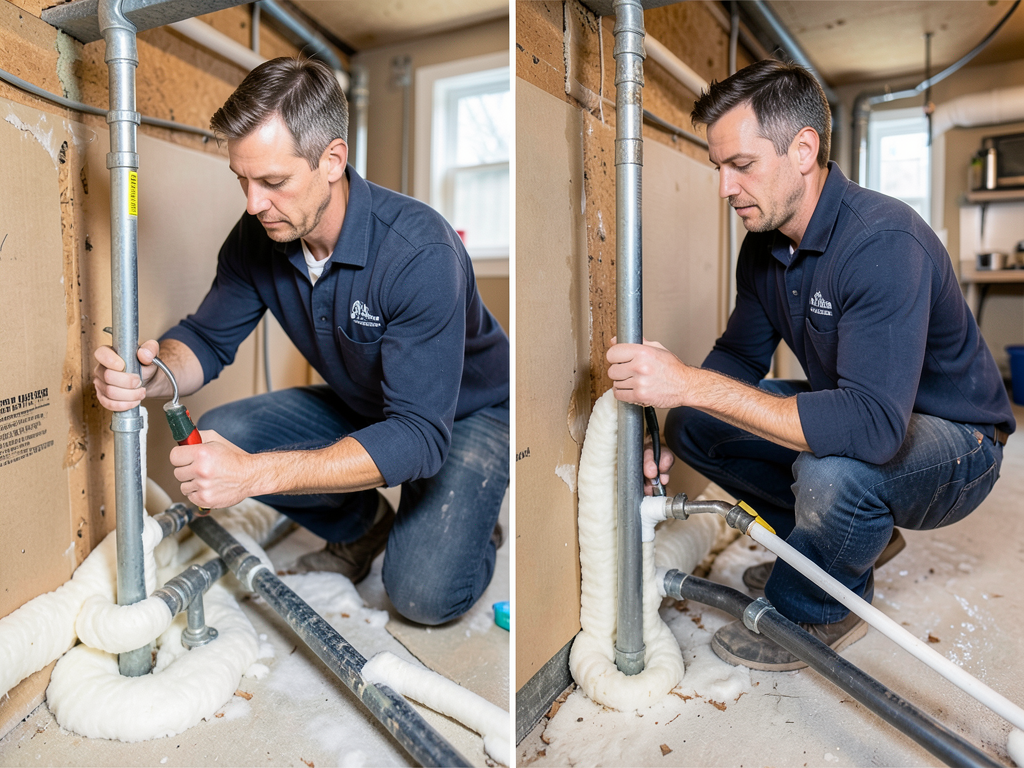
Before calling professionals, several effective DIY methods can significantly reduce pipe sweating in your Lebanon basement. The most immediate solution involves insulating your pipes with foam sleeves or fiberglass wrap.
Foam pipe insulation, available at any Lebanon hardware store, creates a thermal barrier between the cold pipe and warm air. Measure your pipe diameter (typically 1/2″ or 3/4″ for residential supply lines) and purchase pre-slit foam tubes. Cut them to length, wrap around pipes, and seal the seam with duct tape or the manufacturer’s adhesive strip.
For maximum effectiveness, choose closed-cell foam with a minimum R-value of 4.0. This thickness provides adequate insulation for Lebanon’s climate while remaining flexible enough to install in tight basement spaces.
Fiberglass pipe wrap offers superior insulation for problem areas but requires more careful installation. Wear gloves and a dust mask when handling fiberglass, and secure the wrap with plastic tape or zip ties every 12 inches. Reliable Sump Pump Installation in Fishers to Keep Your Basement Dry.
Install a dehumidifier sized for your basement square footage. A 70-pint unit typically handles 1,500 square feet in Lebanon’s humid climate. Position it centrally, away from walls, and empty the collection tank regularly or install a continuous drain line to your floor drain.
Improve basement ventilation by running existing exhaust fans during peak humidity hours (typically afternoon and evening). If your basement lacks ventilation, consider installing a small exhaust fan to exchange moist indoor air with drier outdoor air during low-humidity periods.
Apply mold-resistant paint to basement walls and ceilings after addressing moisture sources. These specialized coatings contain antimicrobial agents that prevent mold growth even in humid conditions.
When Professional Solutions Become Necessary
While DIY methods help, certain situations require professional intervention to permanently solve pipe sweating problems in Lebanon basements. Whole-home dehumidification systems provide superior moisture control compared to portable units, especially in basements exceeding 1,500 square feet.
Professional-grade dehumidifiers integrate with your HVAC system, automatically maintaining optimal humidity levels (45-55%) throughout your home. These systems cost more upfront but use less energy and provide more consistent results than multiple portable units.
Basement waterproofing may be necessary if moisture migrates through concrete walls and floors. Professional waterproofing contractors in Lebanon can apply interior sealants, install drainage systems, and correct grading issues that contribute to high basement humidity.
Plumbing modifications sometimes solve condensation problems at their source. Insulating cold water supply lines within walls before they enter the basement prevents the pipes from cooling humid air in the first place. This approach works particularly well in Lebanon’s older homes where pipes run through uninsulated exterior walls.
Vapor barrier installation in unfinished basement areas prevents ground moisture from evaporating into your basement air. Professionals install heavy-duty polyethylene sheets across dirt floors and seal them to foundation walls, creating an effective moisture barrier.
Temperature regulation through HVAC modifications can reduce condensation. Adding supply vents to your basement or adjusting your thermostat to maintain consistent temperatures prevents the cold-air pockets where condensation forms.
Local Climate Factors Affecting Lebanon Basements
Lebanon, Indiana experiences unique climate conditions that intensify basement moisture problems compared to surrounding areas. Located in Boone County, Lebanon sits at a slightly higher elevation than Indianapolis, experiencing more dramatic temperature swings between day and night during summer months.
The area’s clay-rich soil, common throughout Central Indiana, retains moisture longer than sandy soils. After heavy rains—which occur frequently during Lebanon’s summer thunderstorm season—this soil releases moisture slowly, maintaining high humidity levels for extended periods.
Lebanon’s proximity to the White River watershed means groundwater levels fluctuate significantly with seasonal rainfall. During wet periods, the water table can rise to within a few feet of many basement floors, increasing the moisture load that basements must manage.
Local building practices in Lebanon’s historic districts, particularly around the courthouse square, often feature older construction methods with minimal vapor barriers and inadequate foundation drainage. These homes require more aggressive moisture management strategies than newer construction.
The Indiana Department of Natural Resources reports that Boone County experiences average summer humidity levels of 72%, with July and August being the most problematic months for basement moisture issues. This data aligns with the peak demand for plumbing services related to pipe sweating and condensation control.
Cost Comparison: DIY vs Professional Solutions
Understanding the investment required for different approaches helps you make informed decisions about solving your Lebanon basement moisture problems. Here’s a comparison of common solutions and their typical costs in the Lebanon area:. Read more about Comparing Different Types of Sump Pump Discharge Layouts for Your Fishers Yard.
| Solution | DIY Cost Range | Professional Cost Range | Effectiveness Rating |
|---|---|---|---|
| Foam Pipe Insulation | $50-$150 | $200-$400 | Moderate |
| Portable Dehumidifier | $200-$400 | N/A | Low-Moderate |
| Whole-Home Dehumidifier | N/A | $1,500-$3,500 | High |
| Basement Waterproofing | N/A | $3,000-$10,000 | Very High |
| Plumbing Modifications | N/A | $500-$2,000 | High |
| Vapor Barrier Installation | N/A | $1,000-$3,000 | High |
The most cost-effective approach often combines DIY pipe insulation with professional dehumidification. This combination addresses immediate condensation while providing long-term moisture control.
Preventing Future Moisture Problems
Once you’ve addressed existing condensation, implementing preventive measures ensures your Lebanon basement stays dry year-round. Start with exterior maintenance by ensuring your gutters and downspouts direct water at least 6 feet away from your foundation.
Grade your yard so it slopes away from your foundation at a rate of 1 inch per foot for the first 6 feet. This simple landscaping adjustment prevents water from pooling near your basement walls and seeping through concrete.
Seal any foundation cracks wider than 1/8 inch with hydraulic cement or epoxy injection. Even small cracks allow moisture migration, especially during Lebanon’s wet spring seasons.
Install a sump pump if your basement lacks one or if your existing pump is more than 7 years old. Modern sump pumps include battery backup systems that protect your basement during power outages—critical during summer thunderstorms when pumping needs are highest.
Consider installing a whole-house humidity control system that integrates with your HVAC equipment. These systems maintain optimal humidity levels throughout your home, preventing the conditions that cause pipe sweating.
Schedule annual plumbing inspections to identify potential moisture problems before they cause damage. Professional plumbers can spot early signs of condensation issues, foundation settling, or drainage problems specific to Lebanon’s soil conditions.
Frequently Asked Questions
Is pipe sweating dangerous for my home’s foundation?
Direct pipe sweating doesn’t damage foundations, but the consistent moisture it creates can lead to mold growth, wood rot in floor joists, and deterioration of basement finishes. Over time, these secondary effects can compromise your home’s structural integrity if left untreated.
How long does it take for mold to grow from pipe sweating?
Mold can begin growing within 24-48 hours of sustained moisture exposure. In Lebanon’s humid climate, basement temperatures between 60-70°F create ideal conditions for rapid mold colonization on damp surfaces.
Can I use regular insulation instead of pipe-specific foam?
While regular fiberglass insulation can work temporarily, it absorbs moisture and loses effectiveness over time. Pipe-specific foam insulation contains closed-cell structures that resist moisture absorption and maintain their insulating properties even in humid conditions.
Will insulating pipes make my cold water warmer?
Properly installed pipe insulation has minimal impact on water temperature. The insulation slows heat transfer enough to prevent condensation but doesn’t significantly warm your cold water supply. You’ll still get cold water from your taps.
How do I know if my dehumidifier is big enough?
A properly sized dehumidifier should maintain relative humidity between 45-55%. If you still see condensation after 24-48 hours of operation, or if the unit runs constantly without reaching target humidity, you likely need a larger capacity model.
Are there any building codes specific to basement moisture in Lebanon?
While Lebanon follows Indiana’s statewide plumbing code, local amendments require proper vapor barriers in basements and specific drainage requirements for new construction. The Indiana Plumbing Code Section 305 mandates moisture control measures in below-grade spaces.
Take Action Before Minor Moisture Becomes Major Damage
Ignoring pipe sweating in your Lebanon basement invites escalating problems that grow more expensive to fix over time. What starts as harmless condensation can lead to mold infestations, structural damage, and ruined possessions within a single summer season.
Begin with the simple paper towel test to confirm you’re dealing with condensation rather than leaks. Then implement DIY solutions like pipe insulation and dehumidification to address immediate concerns. For persistent problems or large basements, professional solutions provide the most reliable long-term protection.
Remember that Lebanon’s unique climate—with its high summer humidity, clay soil moisture retention, and significant temperature swings—creates conditions that demand proactive moisture management. Don’t wait until you discover mold behind your drywall or notice your floor joists feeling soft to take action.
Ready to eliminate basement pipe sweating permanently? Call (317) 688-8848 today to schedule your inspection. Our Lebanon plumbing experts will assess your specific situation and recommend solutions that fit your home and budget. Pick up the phone and call (317) 688-8848 before the next summer storm hits—your basement’s future depends on it.
Don’t let another summer of humidity damage your Lebanon home. Call (317) 688-8848 now for a comprehensive basement moisture assessment and customized solution plan.
{
“@context”: “https://schema.org”,
“@type”: “BlogPosting”,
“headline”: “Dealing with Sweating Pipes and High Humidity in Your Lebanon Basement”,
“description”: “Stop basement pipe condensation in Lebanon. Learn why Indy humidity causes sweating pipes and how to prevent mold damage with expert plumbing solutions.”,
“wordCount”: 2167,
“datePublished”: “2026-04-05T12:28:00.000Z”,
“dateModified”: “2026-04-05T12:28:00.000Z”,
“inLanguage”: “en-US”,
“mainEntityOfPage”: {
“@type”: “WebPage”,
“@id”: “https://keystoneplumbingindianapolis.com”
},
“publisher”: {
“@type”: “LocalBusiness”,
“name”: “Keystone Plumbing Indianapolis”,
“url”: “https://keystoneplumbingindianapolis.com”
},
“author”: {
“@type”: “Organization”,
“name”: “Keystone Plumbing Indianapolis”,
“url”: “https://keystoneplumbingindianapolis.com”
},
“image”: {
“@type”: “ImageObject”,
“url”: “https://keystoneplumbingindianapolis.com/wp-content/uploads/2026/03/dealing-with-sweating-pipes-and-high-humidity-in-y-1.png”
}
}
{
“@context”: “https://schema.org”,
“@type”: “Plumber”,
“name”: “Keystone Plumbing Indianapolis”,
“url”: “https://keystoneplumbingindianapolis.com”,
“address”: {
“@type”: “PostalAddress”,
“addressLocality”: “Indianapolis”
},
“areaServed”: {
“@type”: “City”,
“name”: “Indianapolis”
}
}
{
“@context”: “https://schema.org”,
“@type”: “FAQPage”,
“mainEntity”: [
{
“@type”: “Question”,
“name”: “Is pipe sweating dangerous for my home’s foundation?”,
“acceptedAnswer”: {
“@type”: “Answer”,
“text”: “Direct pipe sweating doesn’t damage foundations, but the consistent moisture it creates can lead to mold growth, wood rot in floor joists, and deterioration of basement finishes. Over time, these secondary effects can compromise your home’s structural integrity if left untreated.”
}
},
{
“@type”: “Question”,
“name”: “How long does it take for mold to grow from pipe sweating?”,
“acceptedAnswer”: {
“@type”: “Answer”,
“text”: “Mold can begin growing within 24-48 hours of sustained moisture exposure. In Lebanon’s humid climate, basement temperatures between 60-70°F create ideal conditions for rapid mold colonization on damp surfaces.”
}
},
{
“@type”: “Question”,
“name”: “Can I use regular insulation instead of pipe-specific foam?”,
“acceptedAnswer”: {
“@type”: “Answer”,
“text”: “While regular fiberglass insulation can work temporarily, it absorbs moisture and loses effectiveness over time. Pipe-specific foam insulation contains closed-cell structures that resist moisture absorption and maintain their insulating properties even in humid conditions.”
}
},
{
“@type”: “Question”,
“name”: “Will insulating pipes make my cold water warmer?”,
“acceptedAnswer”: {
“@type”: “Answer”,
“text”: “Properly installed pipe insulation has minimal impact on water temperature. The insulation slows heat transfer enough to prevent condensation but doesn’t significantly warm your cold water supply. You’ll still get cold water from your taps.”
}
},
{
“@type”: “Question”,
“name”: “How do I know if my dehumidifier is big enough?”,
“acceptedAnswer”: {
“@type”: “Answer”,
“text”: “A properly sized dehumidifier should maintain relative humidity between 45-55%. If you still see condensation after 24-48 hours of operation, or if the unit runs constantly without reaching target humidity, you likely need a larger capacity model.”
}
},
{
“@type”: “Question”,
“name”: “Are there any building codes specific to basement moisture in Lebanon?”,
“acceptedAnswer”: {
“@type”: “Answer”,
“text”: “While Lebanon follows Indiana’s statewide plumbing code, local amendments require proper vapor barriers in basements and specific drainage requirements for new construction. The Indiana Plumbing Code Section 305 mandates moisture control measures in below-grade spaces.”
}
}
]
}
{
“@context”: “https://schema.org”,
“@type”: “HowTo”,
“name”: “How to Test for Pipe Sweating”,
“step”: [
{
“@type”: “HowToStep”,
“position”: 1,
“name”: “Visual Inspection”,
“text”: “Look for uniform moisture coverage along the entire length of a pipe section. Sweating pipes show consistent dampness, while leaks create localized wet spots or drips. Wet Spots in Yard.”
},
{
“@type”: “HowToStep”,
“position”: 2,
“name”: “The Paper Towel Test”,
“text”: “Wrap a dry paper towel around the pipe and secure it with tape. If the towel becomes uniformly damp within 30 minutes, you’re dealing with condensation. If only one spot gets wet or you see water dripping through, you have a leak.”
},
{
“@type”: “HowToStep”,
“position”: 3,
“name”: “Temperature Check”,
“text”: “Feel the pipe surface. Sweating pipes feel uniformly cool to the touch. Leaking pipes may feel warm if hot water is involved or show temperature variations along the pipe.”
},
{
“@type”: “HowToStep”,
“position”: 4,
“name”: “Pattern Analysis”,
“text”: “Condensation typically appears on cold water supply lines, especially those running to outdoor spigots or water heaters. Hot water pipes rarely sweat unless they’re part of a recirculation system.”
}
],
“image”: “https://keystoneplumbingindianapolis.com/wp-content/uploads/2026/03/dealing-with-sweating-pipes-and-high-humidity-in-y-1.png”
}
{
“@context”: “https://schema.org”,
“@type”: “BreadcrumbList”,
“itemListElement”: [
{
“@type”: “ListItem”,
“position”: 1,
“name”: “Home”,
“item”: “https://keystoneplumbingindianapolis.com”
},
{
“@type”: “ListItem”,
“position”: 2,
“name”: “Blog”,
“item”: “https://keystoneplumbingindianapolis.com/blog”
},
{
“@type”: “ListItem”,
“position”: 3,
“name”: “Dealing with Sweating Pipes and High Humidity in Your Lebanon Basement”
}
]
}
{
“@context”: “https://schema.org”,
“@type”: “Service”,
“serviceType”: “Plumbing”,
“provider”: {
“@type”: “LocalBusiness”,
“name”: “Keystone Plumbing Indianapolis”,
“url”: “https://keystoneplumbingindianapolis.com”
},
“areaServed”: {
“@type”: “City”,
“name”: “Indianapolis”
},
“description”: “Stop basement pipe condensation in Lebanon. Learn why Indy humidity causes sweating pipes and how to prevent mold damage with expert plumbing solutions.”
}