
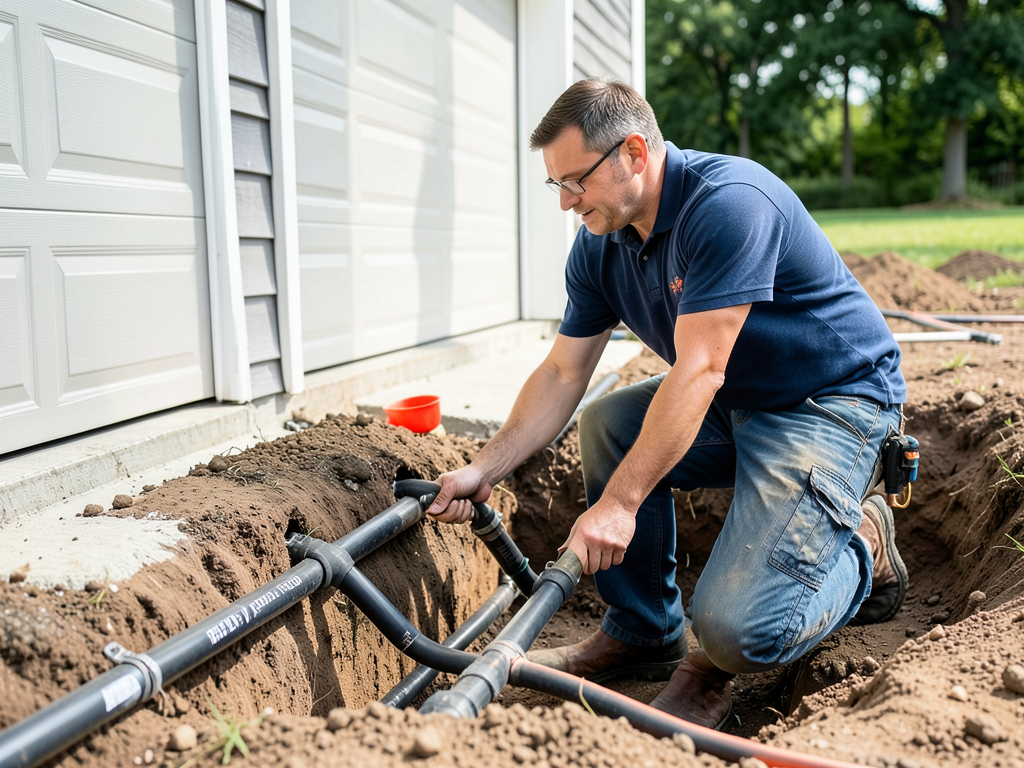
Everything You Need to Know About Running Water Lines to a Detached Garage in Noblesville
Adding water lines to a detached garage in Noblesville requires careful planning due to Indiana’s deep freeze cycles and local building codes. The process involves trenching below the frost line, selecting appropriate pipe materials, and securing the right permits from Hamilton County. Most homeowners underestimate the complexity of this project, but understanding the requirements upfront saves time and prevents costly mistakes. Indiana Department of Homeland Security.
Indiana winters drop below freezing for extended periods, making proper pipe burial depth critical. The frost line in Noblesville typically reaches 36 inches deep, meaning water lines must be installed below this level to prevent freezing and bursting. This depth requirement affects both the trenching process and the overall project timeline.
Before breaking ground, you need to consider several factors including property lines, existing utilities, and the intended use of your garage plumbing. Will you install just a cold water line for washing cars? Or do you need both hot and cold water for a workshop sink or even a small bathroom? Each scenario changes the complexity and cost of the project.
Planning Your Garage Plumbing: Costs and Considerations
The cost to run water lines to a detached garage varies significantly based on distance, trenching requirements, and the number of fixtures. A basic cold water line for a utility sink might cost between $1,500 and $2,500, while a complete system with hot water and drainage could range from $3,000 to $5,000 or more.
Distance plays the biggest role in determining cost. If your garage sits 50 feet from your home, you’ll need less trenching and fewer materials than if it’s 150 feet away. Each additional foot of trench adds labor time and requires more pipe, fittings, and protective materials.
The intended use of your garage plumbing also affects planning. A simple cold water line for washing vehicles requires minimal equipment. However, if you plan to install a bathroom or wet bar, you’ll need to factor in drainage systems, venting requirements, and possibly an ejector pump if the garage sits lower than your home’s main sewer line. Trenchless Sewer Line Replacement in Greenwood without Digging Up Your Yard.
Property considerations matter too. If your property has mature trees, you’ll need to navigate around root systems. Rocky soil in parts of Noblesville can slow trenching significantly. And if you share a property line with neighbors, you may need to coordinate access or adjust your trench path.
Indiana Frost Lines and Trenching Requirements
Indiana’s climate demands specific trenching practices that differ from southern states. The Indiana Plumbing Code requires water lines to be buried below the frost line to prevent freezing. In Noblesville and surrounding Hamilton County, this means digging trenches at least 36 inches deep. Hamilton County Planning and Development.
Trenching depth isn’t just about frost protection. The 36-inch requirement also provides adequate cover for pipes to withstand soil pressure and resist damage from surface activities. Shallower trenches risk freezing damage and may violate local codes, potentially causing issues when you sell your home.
Soil conditions in Noblesville vary significantly. Areas near the White River have heavier clay soil that holds moisture and can shift more dramatically with freeze-thaw cycles. This requires careful bedding of pipes with sand or gravel to prevent stress on connections. Sandy areas drain better but may require more stable trench walls to prevent collapse during digging.
Before any trenching begins, you must contact Indiana Underground Plant Protection Service at 811. This free service marks all underground utilities including gas lines, electrical conduits, and communication cables. Hitting an unmarked utility can cause serious injury, service outages, and expensive repairs.
The trenching process itself requires specific techniques. The bottom of the trench should be flat and free of rocks that could damage pipes. Many contractors use a layer of sand or fine gravel beneath pipes for protection. The pipe must maintain a consistent downward slope of at least 1/4 inch per foot for drainage lines.
Key Components: Water Lines, Drainage, and Venting
Selecting the right pipe material for your garage plumbing affects longevity and performance. PEX (cross-linked polyethylene) has become the most popular choice for residential applications due to its flexibility, freeze resistance, and lower cost compared to copper. PEX expands slightly when water freezes, reducing burst risk.
Copper remains a premium option, especially for hot water lines. It handles high temperatures well and has a proven track record of durability. However, copper costs significantly more than PEX and requires more skill to install properly. The choice often comes down to budget and personal preference.
For drainage systems, PVC Schedule 40 pipe meets Indiana code requirements. This rigid pipe handles waste water effectively and resists corrosion. The pipe must be properly sloped and connected with appropriate fittings to prevent leaks and ensure proper flow to your home’s main sewer or septic system. Sewer Camera Inspections in Pike Township to Find the Root of Your Problem.
Ventilation becomes critical when adding fixtures to your garage. Plumbing vents prevent traps from being siphoned dry and allow sewer gases to escape safely. A typical garage bathroom setup requires at least one vent pipe running back to your home’s main vent stack, usually through the roof.
Backflow prevention devices may be required depending on your specific setup. These prevent contaminated water from flowing back into your clean water supply. The Indiana Department of Environmental Management often mandates these devices when adding new plumbing connections to existing systems.
Do You Need an Ejector Pump?
Ejector pumps become necessary when your garage sits lower than your home’s main sewer line or septic system. Gravity alone cannot move waste water uphill, making mechanical assistance essential. This is common in Noblesville where many properties have sloped lots or garages built into hillsides.
The pump system consists of a basin that collects waste water, a pump that moves it upward, and discharge pipes that connect to your main sewer line. The basin must be properly sized for your expected usage and installed below the lowest fixture to ensure all waste water flows into it.
Power requirements for ejector pumps matter. These systems need dedicated electrical circuits with proper grounding and GFCI protection since they operate in potentially wet environments. Battery backup systems provide protection during power outages, preventing sewage backup into your garage.
Maintenance considerations include regular testing of the pump, checking float switches, and cleaning the basin. A failed ejector pump can cause significant damage and create health hazards. Most systems last 7-10 years with proper maintenance, but heavy usage may require more frequent replacement.
Noise levels vary between pump models. Some operate relatively quietly while others produce noticeable sound during cycling. If your garage serves as a workshop or entertainment space, consider sound-dampening options or locate the pump in an enclosed area away from main activity zones.
Indianapolis Building Permits for Detached Structures
Permit requirements for garage plumbing in Noblesville fall under Hamilton County jurisdiction, but follow guidelines similar to Indianapolis standards. You’ll need a plumbing permit from the Hamilton County Planning and Development office before starting any work. This ensures your project meets all safety and code requirements.
The permit process typically requires detailed plans showing the proposed work, including trench locations, pipe sizes, and fixture specifications. A licensed plumber must sign these plans, taking responsibility for code compliance. Permit fees vary based on project scope but generally range from $75 to $300 for residential work.
Inspections occur at multiple stages. A rough-in inspection happens after trenching and before burying pipes. A final inspection occurs when all work completes. Missing inspections can result in fines and may complicate future home sales. Some homeowners try to skip permits, but this creates liability and insurance issues.
Local zoning regulations may affect your project. Setback requirements determine how close you can run pipes to property lines. Easements on your property may restrict where you can trench. And if you’re in a homeowners association, additional approval may be required before permits can be issued.
Working with a licensed local plumber simplifies the permit process. They understand specific Hamilton County requirements, can accurately estimate costs, and know how to navigate potential complications like shared utility lines or difficult soil conditions. Their experience often prevents costly mistakes that DIY attempts might cause.
Winterization: Preventing Frozen Pipes in an Unheated Garage
Even with proper burial depth, pipes in unheated garages face freezing risks during extreme cold snaps. Noblesville experiences temperatures below zero Fahrenheit several times each winter, creating conditions where even buried pipes can freeze if not properly protected.
Insulation becomes your first defense line. Foam pipe insulation rated for underground use provides basic protection. For added security, heat tape can be wrapped around pipes before insulation. This electrical heating element activates when temperatures drop below a set point, preventing freezing even in severe cold.
Where pipes exit the ground and enter your garage, extra protection matters. This transition point often represents the coldest section of the system. Insulating the wall penetration area and ensuring a tight seal prevents cold air infiltration that could freeze nearby pipes.
Drain valves installed at low points in your system allow you to completely empty pipes before extended cold periods. This proves especially valuable if you don’t use your garage plumbing during winter months. Simply opening these valves and allowing pipes to drain eliminates freeze risk entirely.
Consider installing a small garage heater if you use the space year-round. Even a basic 1,500-watt electric heater can maintain temperatures above freezing when garage doors remain closed. This protects not just your plumbing but also any items stored in the space that might be damaged by extreme cold.
Regular winter maintenance includes checking for drafts around pipe penetrations, ensuring insulation remains intact, and verifying that heat tape functions properly. A simple visual inspection before each cold snap can prevent the costly repairs that frozen and burst pipes cause.
Cost Breakdown and Value Considerations
Understanding the cost components helps you budget accurately for your garage plumbing project. Labor typically represents 40-60% of total costs, with experienced plumbers charging $75-150 per hour depending on project complexity and local market rates in the Noblesville area.
Materials break down into several categories. Pipe costs vary by type – PEX runs approximately $0.50-2.00 per foot while copper costs $2-4 per foot. Fittings, valves, and connectors add another 20-30% to material costs. Insulation, backfill material, and protective sleeves contribute additional expenses.
Equipment rental may be necessary if you’re doing some work yourself. Trenchers rent for $150-300 per day, while compact excavators cost $200-400 daily. These machines significantly speed up digging but require skill to operate safely and effectively on residential properties.
Hidden costs often surprise homeowners. Repairing landscaping damage from trenching, upgrading electrical service for new fixtures, or addressing unexpected utility conflicts can add 15-25% to your initial budget. Building in a contingency fund prevents these surprises from derailing your project. Detecting and Repairing Slab Leaks in Indianapolis Before They Damage Your Foundation.
The value proposition extends beyond simple convenience. A properly plumbed garage increases property value and expands usable space. For workshop enthusiasts, the ability to have running water transforms a basic storage area into a functional workspace. And for those considering future home sales, this upgrade appeals to many buyers.
Common Mistakes to Avoid
DIY plumbing projects often fail due to inadequate planning. Many homeowners underestimate the importance of proper slope for drainage lines or choose incorrect pipe sizes. These mistakes may not cause immediate problems but lead to chronic issues that require expensive repairs later.
Skipping permits represents another frequent error. While it seems like a way to save money upfront, unpermitted work creates significant problems. Insurance companies may deny claims for damage caused by unpermitted plumbing. And when selling your home, unpermitted additions can derail transactions or reduce property value.
Improper pipe support causes long-term issues. Pipes need hangers or straps at specific intervals to prevent sagging and stress on connections. Over time, unsupported pipes develop leaks at joints or develop low spots that trap water and debris, leading to clogs and reduced flow.
Ignoring local conditions proves costly. Using materials suited for warm climates in Indiana’s freeze-thaw environment guarantees failure. Similarly, failing to account for soil expansion and contraction leads to cracked pipes and broken connections. Local experience matters when selecting materials and installation methods. Reliable Sump Pump Installation in Fishers to Keep Your Basement Dry.
Rushing the installation process creates problems. Proper pipe joining requires attention to detail and adherence to manufacturer specifications. Cutting corners on solvent welding, crimp connections, or thread sealing inevitably results in leaks that may not appear until months after installation.
Maintenance and Troubleshooting
Once your garage plumbing installs, ongoing maintenance ensures longevity and prevents problems. Annual inspections should check for leaks, verify insulation integrity, and test all fixtures. Look for water stains on walls or ceilings that might indicate hidden leaks in supply lines.
Drain maintenance prevents clogs that can back up into your garage. Avoid pouring grease, paint, or harsh chemicals down drains. Use strainers on all fixtures to catch debris. Periodically flush drains with hot water to clear accumulated buildup before it causes blockages.
Pressure testing your system annually helps identify developing problems. Most home water pressure should stay between 40-60 psi. Higher pressure stresses pipes and fixtures, potentially causing premature failure. Pressure-reducing valves can protect your entire plumbing system if municipal pressure runs high.
Winter preparation goes beyond basic freeze protection. Disconnect and drain outdoor hoses, insulate exposed pipes, and consider shutting off water to unused fixtures during extreme cold. These simple steps prevent the most common winter plumbing emergencies.
Know when to call a professional. Persistent low water pressure, unusual noises in pipes, or signs of water damage require expert diagnosis. Early intervention prevents minor issues from becoming major repairs that disrupt your home and empty your wallet.
Future Expansion Considerations
Planning for future needs during initial installation saves significant money and disruption later. If you might add a bathroom or upgrade to a full workshop in coming years, installing larger diameter supply lines and drainage pipes now prevents costly rework later.
Consider running conduit alongside your plumbing pipes. This empty pipe allows you to easily add electrical wiring, data cables, or other utilities without digging new trenches. The small additional cost during initial installation proves minimal compared to the convenience and savings of future upgrades.
Space planning matters for future fixtures. Even if you’re installing only a basic utility sink now, framing and roughing in plumbing for a potential future bathroom or kitchenette costs little extra during initial construction but adds significant value later.
Think about how your needs might change over time. A growing family might need more functional space. A home-based business could require additional plumbing capacity. Building flexibility into your initial design accommodates these changes without major reconstruction.
Document everything about your installation. Keep copies of permits, inspection reports, and as-built drawings showing pipe locations. This information proves invaluable for future maintenance, repairs, or renovations. Many homeowners learn this lesson only after emergency repairs become necessary.
Environmental and Efficiency Considerations
Modern plumbing installations can significantly reduce water and energy consumption. Low-flow fixtures in your garage sink or bathroom reduce water usage without sacrificing performance. These fixtures pay for themselves through utility savings while conserving resources.
Hot water recirculation systems eliminate the wait for hot water to reach distant fixtures. While these systems cost more upfront, they save water and energy by reducing the amount of cold water wasted while waiting for hot water to arrive at your garage sink or shower.
Consider the environmental impact of your material choices. PEX production requires less energy than copper mining and processing. Some manufacturers now offer recycled content options for various plumbing components, allowing you to reduce your project’s environmental footprint.
Rainwater harvesting systems can supplement your garage plumbing for non-potable uses like washing vehicles or watering plants. These systems collect roof runoff, filter it appropriately, and provide an alternative water source that reduces demand on municipal supplies or septic systems.
Proper insulation of hot water pipes reduces heat loss during transmission. This means your water heater doesn’t work as hard to maintain temperature, saving energy and reducing utility costs. The investment in quality insulation typically pays for itself within a few years through energy savings.
Frequently Asked Questions
How deep should water lines be buried for a detached garage in Noblesville?
Water lines must be buried at least 36 inches deep to comply with Indiana plumbing codes and prevent freezing during winter months. This depth ensures pipes remain below the frost line even during severe cold snaps.
Do I need a permit to run water lines to my detached garage?
Yes, you need a plumbing permit from Hamilton County Planning and Development. The permit ensures your work meets code requirements and includes necessary inspections at multiple project stages.
Can I use PEX pipe for my garage plumbing project?
Yes, PEX pipe works excellently for garage applications. It resists freezing damage, costs less than copper, and installs more quickly. Many professionals prefer PEX for these reasons, especially in unheated spaces. Quick Garbage Disposal Repair in Lawrence to Get Your Kitchen Back in Order.
How much does it cost to add plumbing to a detached garage?
Basic cold water service costs $1,500-2,500, while complete systems with hot water and drainage range from $3,000-5,000 or more. Costs depend on distance, trenching requirements, and the number of fixtures.
What happens if my garage is lower than my house sewer line?
You’ll likely need an ejector pump to move waste water uphill to your main sewer connection. These systems collect waste water and use a pump to lift it to the proper elevation for gravity flow to your sewer or septic system.
Ready to add functional plumbing to your detached garage? The experts at Keystone Plumbing understand Noblesville’s specific requirements and can handle your project from initial planning through final inspection. Don’t risk costly mistakes or code violations – call (317) 688-8848 today to schedule your consultation and get your garage plumbing project started right.
{
“@context”: “https://schema.org”,
“@type”: “BlogPosting”,
“headline”: “Everything You Need to Know About Running Water Lines to a Detached Garage in Noblesville”,
“description”: “Learn the exact trenching depth, pipe materials, and permit requirements for adding plumbing to your detached garage in Noblesville. Expert Indiana-specific guidance.”,
“wordCount”: 3021,
“datePublished”: “2026-05-31T06:09:00.000Z”,
“dateModified”: “2026-05-31T06:09:00.000Z”,
“inLanguage”: “en-US”,
“mainEntityOfPage”: {
“@type”: “WebPage”,
“@id”: “https://keystoneplumbingindianapolis.com”
},
“publisher”: {
“@type”: “LocalBusiness”,
“name”: “Keystone Plumbing Indianapolis”,
“url”: “https://keystoneplumbingindianapolis.com”
},
“author”: {
“@type”: “Organization”,
“name”: “Keystone Plumbing Indianapolis”,
“url”: “https://keystoneplumbingindianapolis.com”
},
“image”: {
“@type”: “ImageObject”,
“url”: “https://keystoneplumbingindianapolis.com/wp-content/uploads/2026/03/everything-you-need-to-know-about-running-water-li-1.png”
}
}
{
“@context”: “https://schema.org”,
“@type”: “Plumber”,
“name”: “Keystone Plumbing Indianapolis”,
“url”: “https://keystoneplumbingindianapolis.com”,
“address”: {
“@type”: “PostalAddress”,
“addressLocality”: “Indianapolis”
},
“areaServed”: {
“@type”: “City”,
“name”: “Indianapolis”
}
}
{
“@context”: “https://schema.org”,
“@type”: “FAQPage”,
“mainEntity”: [
{
“@type”: “Question”,
“name”: “Do You Need an Ejector Pump?”,
“acceptedAnswer”: {
“@type”: “Answer”,
“text”: “Ejector pumps become necessary when your garage sits lower than your home’s main sewer line or septic system. Gravity alone cannot move waste water uphill, making mechanical assistance essential. This is common in Noblesville where many properties have sloped lots or garages built into hillsides.”
}
},
{
“@type”: “Question”,
“name”: “How deep should water lines be buried for a detached garage in Noblesville?”,
“acceptedAnswer”: {
“@type”: “Answer”,
“text”: “Water lines must be buried at least 36 inches deep to comply with Indiana plumbing codes and prevent freezing during winter months. This depth ensures pipes remain below the frost line even during severe cold snaps.”
}
},
{
“@type”: “Question”,
“name”: “Do I need a permit to run water lines to my detached garage?”,
“acceptedAnswer”: {
“@type”: “Answer”,
“text”: “Yes, you need a plumbing permit from Hamilton County Planning and Development. The permit ensures your work meets code requirements and includes necessary inspections at multiple project stages.”
}
},
{
“@type”: “Question”,
“name”: “Can I use PEX pipe for my garage plumbing project?”,
“acceptedAnswer”: {
“@type”: “Answer”,
“text”: “Yes, PEX pipe works excellently for garage applications. It resists freezing damage, costs less than copper, and installs more quickly. Many professionals prefer PEX for these reasons, especially in unheated spaces. Quick Garbage Disposal Repair in Lawrence to Get Your Kitchen Back in Order.”
}
},
{
“@type”: “Question”,
“name”: “How much does it cost to add plumbing to a detached garage?”,
“acceptedAnswer”: {
“@type”: “Answer”,
“text”: “Basic cold water service costs $1,500-2,500, while complete systems with hot water and drainage range from $3,000-5,000 or more. Costs depend on distance, trenching requirements, and the number of fixtures.”
}
},
{
“@type”: “Question”,
“name”: “What happens if my garage is lower than my house sewer line?”,
“acceptedAnswer”: {
“@type”: “Answer”,
“text”: “You’ll likely need an ejector pump to move waste water uphill to your main sewer connection. These systems collect waste water and use a pump to lift it to the proper elevation for gravity flow to your sewer or septic system.”
}
}
]
}
{
“@context”: “https://schema.org”,
“@type”: “BreadcrumbList”,
“itemListElement”: [
{
“@type”: “ListItem”,
“position”: 1,
“name”: “Home”,
“item”: “https://keystoneplumbingindianapolis.com”
},
{
“@type”: “ListItem”,
“position”: 2,
“name”: “Blog”,
“item”: “https://keystoneplumbingindianapolis.com/blog”
},
{
“@type”: “ListItem”,
“position”: 3,
“name”: “Everything You Need to Know About Running Water Lines to a Detached Garage in Noblesville”
}
]
}
{
“@context”: “https://schema.org”,
“@type”: “Service”,
“serviceType”: “Plumbing”,
“provider”: {
“@type”: “LocalBusiness”,
“name”: “Keystone Plumbing Indianapolis”,
“url”: “https://keystoneplumbingindianapolis.com”
},
“areaServed”: {
“@type”: “City”,
“name”: “Indianapolis”
},
“description”: “Learn the exact trenching depth, pipe materials, and permit requirements for adding plumbing to your detached garage in Noblesville. Expert Indiana-specific guidance.”
}