
How to Choose a Water Softener That Won’t Waste Too Much Salt in Your Greenwood Home
Living in Greenwood means dealing with extremely hard water that leaves scale on your fixtures, makes your skin feel dry, and shortens the life of your appliances. The right water softener can solve these problems, but many homeowners waste hundreds of dollars on salt each year with inefficient systems. Understanding how to choose a salt-efficient water softener can save you money while still protecting your home from hard water damage. Benefits of Water Softeners.
Indianapolis-area water typically contains 15-25+ grains per gallon of hardness minerals. Standard water softeners regenerate based on a timer, flushing salt and water whether your household needs it or not. This wastes both resources and money. Modern demand-initiated regeneration systems monitor your actual water usage and only regenerate when necessary, cutting salt consumption by up to 50% while maintaining the same water quality protection.. Read more about Why You Must Descale Your Tankless Water Heater Every Year in Noblesville.
The key to choosing the right system starts with understanding your home’s specific needs. A family of four in Greenwood might use 300 gallons of water daily, but a retired couple might use half that amount. A properly sized system matches your household’s water usage patterns rather than following a rigid schedule. This means you’re not paying to regenerate a system that’s only half full of resin beads.
Understanding Indianapolis Water Hardness and Its Impact
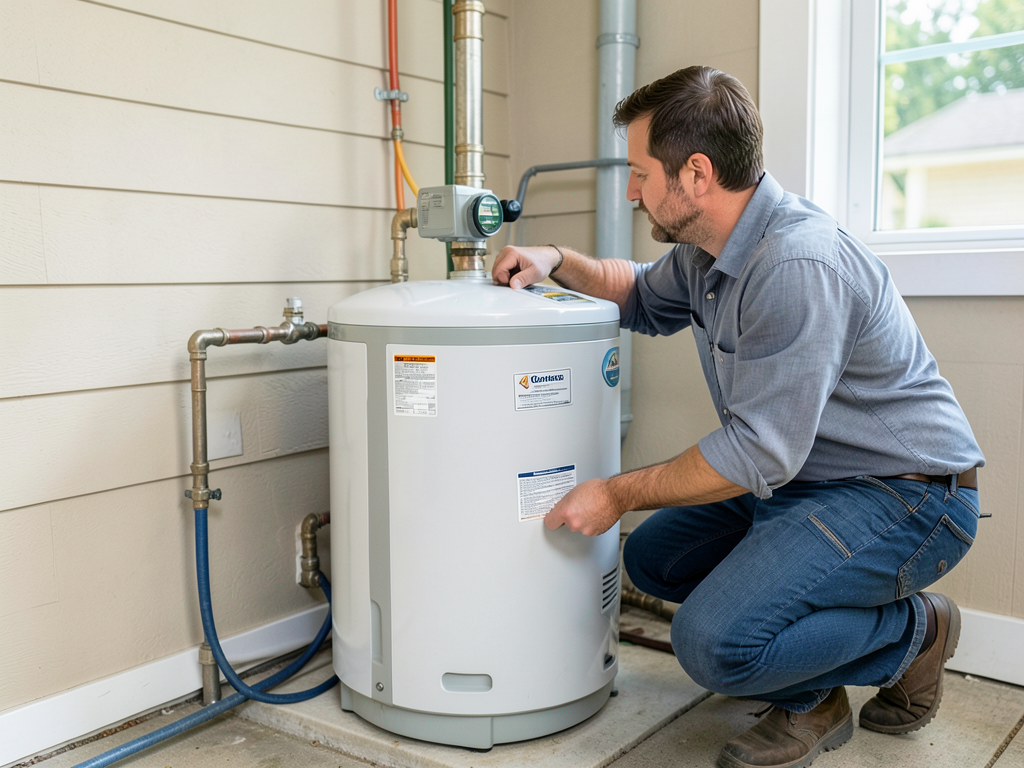
Marion County’s water hardness comes from limestone bedrock that dissolves into the groundwater supply. The Citizens Energy Group water quality report shows hardness levels ranging from 15 to 25 grains per gallon across different neighborhoods. In Greenwood specifically, the water tends to be on the higher end of that range due to the area’s deeper wells and limestone-rich soil. Citizens Energy Group Water Quality Report.
Hard water creates several problems in your home. Scale builds up inside pipes, reducing water flow and efficiency. Water heaters work harder and wear out faster when covered in mineral deposits. Soap doesn’t lather properly, leaving residue on skin and laundry. Over time, these issues cost you money through higher utility bills and premature appliance replacement.
Traditional water softeners use ion exchange technology where resin beads capture calcium and magnesium ions, replacing them with sodium ions. When the beads become saturated, the system flushes them with a brine solution to recharge. The problem is that standard systems regenerate on a fixed schedule, often wasting salt and water when your household usage is low.
Demand-Initiated Regeneration vs. Timer-Based Systems
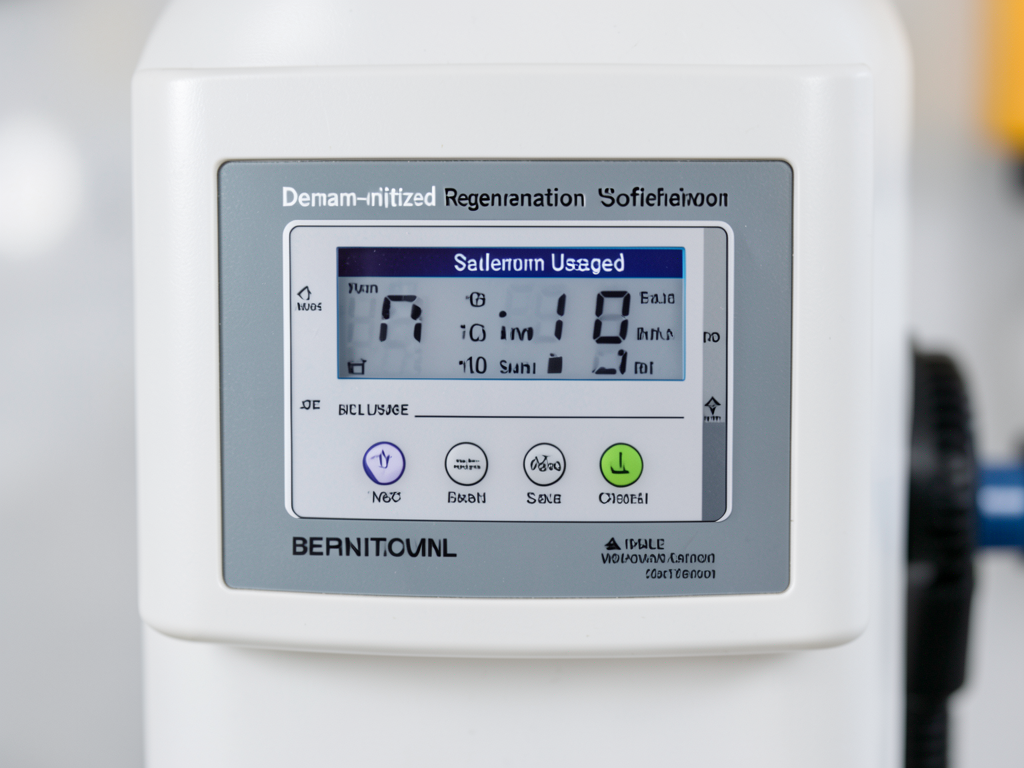
Demand-initiated regeneration (DIR) systems represent the biggest advancement in water softener efficiency. These systems use a meter to track actual water flow through the unit. When the resin bed reaches capacity based on your household’s usage, the system initiates regeneration automatically. This means a family that uses less water during vacation regenerates less frequently, saving salt and water.
Timer-based systems operate on a fixed schedule regardless of usage. A typical timer system might regenerate every three days whether you’ve used 100 gallons or 1,000 gallons. This leads to unnecessary regenerations when you’re away from home or using less water than usual. Some systems even regenerate during the day when water demand is highest, causing pressure drops.
The difference in efficiency becomes clear when you examine the numbers. A standard timer-based system might use 40-50 pounds of salt per month for a family of four. A high-efficiency DIR system with the same capacity might use only 20-25 pounds per month. Over a year, that’s 240-300 pounds of salt saved, plus the water used in unnecessary regenerations.
Comparing Salt-Efficient Water Softener Models
| Model Type | Salt Efficiency | Water Usage per Regen | Best For |
|---|---|---|---|
| Standard Timer | Low (40-50 lbs/month) | 50-60 gallons | Budget installations |
| Demand-Initiated | High (20-25 lbs/month) | 20-25 gallons | Most Greenwood homes |
| Twin Tank System | Very High (15-20 lbs/month) | 15-20 gallons | Large families, commercial |
High-efficiency water softeners use several technologies to reduce salt and water waste. Upflow brining sends water through the resin bed in the same direction as service flow, improving contact and reducing the amount of brine needed. Precision brining meters the exact amount of salt solution required rather than using a fixed volume. Some advanced systems even learn your household’s usage patterns over time.
Resin quality also affects efficiency. Cross-linked resin with higher cross-link density lasts longer and requires less frequent replacement. Standard resin might need replacement every 8-10 years, while premium resin can last 15-20 years. The initial cost difference pays for itself through reduced maintenance and better performance over the system’s lifetime.. Read more about Essential Septic Tank Maintenance Tips for Rural Properties in Franklin.
Cost-Benefit Analysis for Greenwood Homeowners
Let’s look at the real costs of operating different water softener systems in Greenwood. A standard timer-based system might cost $800-$1,200 installed but use $15-$20 worth of salt monthly. Over five years, that’s $900-$1,200 in salt costs alone. Add water waste from unnecessary regenerations and you’re looking at significant ongoing expenses.
A high-efficiency system might cost $1,500-$2,500 installed but use only $8-$12 worth of salt monthly. Over five years, salt costs drop to $480-$720. The higher upfront cost is offset by salt savings within 3-4 years, and you continue saving for the system’s 15-20 year lifespan. Plus, you’re using 50-75% less water for regeneration.
Beyond direct costs, consider the impact on your appliances and plumbing. Hard water scale reduces water heater efficiency by up to 30%, according to the Water Quality Association. A softener that protects your $1,500 water heater from premature failure pays for itself in extended appliance life. Dishwashers, washing machines, and coffee makers also benefit from scale-free operation.
Professional Installation Benefits in Indianapolis
Professional installation ensures your water softener meets all local plumbing codes and operates at peak efficiency. The Indianapolis plumbing code requires proper drainage for brine discharge, typically through an air gap to prevent backflow contamination. DIY installations often violate these requirements, creating potential health hazards and code violations. Reliable Sump Pump Installation in Fishers to Keep Your Basement Dry.
Local water conditions affect system performance. Indianapolis-area water contains not just hardness minerals but also iron and sediment that can foul resin beds. Professional installers know to include pre-filters for these contaminants, extending resin life and maintaining efficiency. They also understand local water pressure variations and can size your system accordingly.. Read more about Dealing with Heavy Sediment in the Water Supply Near Eagle Creek.
Proper sizing prevents two common problems. An undersized system regenerates too frequently, wasting salt and wearing out components. An oversized system costs more upfront and may not regenerate often enough to keep the resin bed fresh. A professional assessment considers your household size, water usage patterns, and hardness level to recommend the right capacity.
Maintenance Requirements for Peak Efficiency
Even the most efficient water softener needs regular maintenance to perform optimally. Annual cleaning of the brine tank prevents salt bridges and mushing that reduce efficiency. A salt bridge forms when a hard crust develops above the water level, preventing salt from dissolving properly. This forces the system to use more salt than necessary to achieve the same softening effect.
Resin bed inspection every 3-5 years ensures the beads haven’t broken down or become fouled with iron or organic matter. Fouled resin requires more frequent regeneration and uses more salt. Professional cleaning or replacement at the right intervals maintains the system’s efficiency rating rather than letting it gradually decline.
Water testing helps you adjust salt dosage for changing conditions. Indianapolis water quality can vary seasonally, with higher hardness levels in winter when groundwater levels drop. Modern systems allow fine-tuning of regeneration parameters to match current conditions, maximizing efficiency while maintaining water quality.
Local Plumbing Code Compliance and Environmental Considerations
Indianapolis and surrounding areas have specific requirements for water softener discharge. The Marion County plumbing code follows Indiana state standards for brine disposal, requiring proper drainage to prevent environmental contamination. Some areas restrict salt-based softeners entirely due to environmental concerns, though Greenwood currently allows them with proper installation.
The EPA has studied the environmental impact of water softener discharge, particularly in areas with combined sewer systems. While individual systems have minimal impact, the cumulative effect of many softeners can increase chloride levels in waterways. High-efficiency systems reduce this impact by using less salt while still providing the benefits of softened water. EPA Water Softener Information.
Alternative technologies like salt-free conditioners or reverse osmosis systems eliminate salt discharge but have limitations. Salt-free systems don’t actually remove hardness minerals, just prevent scale formation. Reverse osmosis provides excellent water quality but requires more maintenance and wastes water during the filtration process. Understanding these trade-offs helps you make the right choice for your home.. Read more about Why an Under-Sink Reverse Osmosis System Is Better Than Filtered Pitchers for Indianapolis Water.
Making the Right Choice for Your Greenwood Home
The best water softener for your Greenwood home depends on your specific situation. Consider your household size, water usage patterns, and budget. A family of six with teenagers who take long showers needs a different system than a retired couple who travel frequently. The key is matching the system’s capacity and efficiency features to your actual needs.
Look for systems with NSF/ANSI Standard 44 certification, which ensures the softener meets efficiency and performance standards. Check the system’s salt efficiency rating – higher numbers mean less salt used per gallon of softened water. Also consider warranty coverage, as quality manufacturers stand behind their high-efficiency components.
Professional assessment can identify issues that affect your choice. High iron content requires different resin or pre-treatment. Low water pressure might limit your options. Existing plumbing configuration affects installation complexity and cost. A thorough evaluation prevents costly mistakes and ensures you get a system that works efficiently for years to come. Apartment Complex Plumbing.
Call (317) 688-8848 today to schedule your professional water softener assessment. Our Greenwood experts will test your water, evaluate your household’s needs, and recommend the most efficient system for your home. Don’t waste another dollar on an inefficient softener – let us help you choose the right solution.
Frequently Asked Questions
How much salt should a water softener use per month?
A properly sized, high-efficiency water softener for a typical Greenwood home should use 15-25 pounds of salt per month. Timer-based systems often use 40-50 pounds monthly. The exact amount depends on your household size, water hardness, and system efficiency rating.
Can I install a water softener myself to save money?
While DIY installation is possible, professional installation ensures proper sizing, code compliance, and optimal efficiency. Incorrect installation can void warranties, violate local codes, and result in poor performance that wastes salt and water. Professional assessment also identifies pre-treatment needs for iron or sediment.
How often should I clean my water softener’s brine tank?
Annual cleaning prevents salt bridges and mushing that reduce efficiency. However, if you notice the system using more salt than usual or inconsistent water softness, check the brine tank sooner. Some households in areas with high humidity may need more frequent cleaning to prevent salt clumping.
What’s the difference between salt and potassium chloride in water softeners?
Potassium chloride works the same way as sodium chloride but is more environmentally friendly and better for people on sodium-restricted diets. However, it costs 3-4 times more than standard salt and may not be as efficient in extremely hard water conditions like those found in Greenwood.
How long do water softener resins last?
Standard resin typically lasts 8-10 years, while high-quality cross-linked resin can last 15-20 years. Factors affecting resin life include water quality, iron content, and maintenance. Regular cleaning and proper salt dosage help maximize resin lifespan and maintain system efficiency.
Will a water softener remove iron from my water?
Standard water softeners remove small amounts of clear-water iron (up to 1-2 ppm), but high iron levels require specialized resin or pre-treatment filters. Indianapolis-area water often contains iron that can foul standard resin, reducing efficiency and increasing salt usage. Professional testing determines if additional treatment is needed.
Ready to stop wasting salt and start saving money? Call (317) 688-8848 now for your free water quality assessment. Our Greenwood water treatment specialists will help you choose the perfect salt-efficient system for your home’s needs. Don’t let another month of hard water damage your appliances and waste your money.
{
“@context”: “https://schema.org”,
“@type”: “BlogPosting”,
“headline”: “How to Choose a Water Softener That Won’t Waste Too Much Salt in Your Greenwood Home”,
“description”: “Discover how to pick a salt-efficient water softener for your Greenwood home. Learn about Indianapolis water hardness, high-efficiency systems, and professional installation to save money and reduce salt waste.”,
“wordCount”: 1994,
“datePublished”: “2026-05-20T15:13:00.000Z”,
“dateModified”: “2026-05-20T15:13:00.000Z”,
“inLanguage”: “en-US”,
“mainEntityOfPage”: {
“@type”: “WebPage”,
“@id”: “https://keystoneplumbingindianapolis.com”
},
“publisher”: {
“@type”: “LocalBusiness”,
“name”: “Keystone Plumbing Indianapolis”,
“url”: “https://keystoneplumbingindianapolis.com”
},
“author”: {
“@type”: “Organization”,
“name”: “Keystone Plumbing Indianapolis”,
“url”: “https://keystoneplumbingindianapolis.com”
},
“image”: {
“@type”: “ImageObject”,
“url”: “https://keystoneplumbingindianapolis.com/wp-content/uploads/2026/03/how-to-choose-a-water-softener-that-won-t-waste-to-1.png”
}
}
{
“@context”: “https://schema.org”,
“@type”: “Plumber”,
“name”: “Keystone Plumbing Indianapolis”,
“url”: “https://keystoneplumbingindianapolis.com”,
“address”: {
“@type”: “PostalAddress”,
“addressLocality”: “Indianapolis”
},
“areaServed”: {
“@type”: “City”,
“name”: “Indianapolis”
}
}
{
“@context”: “https://schema.org”,
“@type”: “FAQPage”,
“mainEntity”: [
{
“@type”: “Question”,
“name”: “How much salt should a water softener use per month?”,
“acceptedAnswer”: {
“@type”: “Answer”,
“text”: “A properly sized, high-efficiency water softener for a typical Greenwood home should use 15-25 pounds of salt per month. Timer-based systems often use 40-50 pounds monthly. The exact amount depends on your household size, water hardness, and system efficiency rating.”
}
},
{
“@type”: “Question”,
“name”: “Can I install a water softener myself to save money?”,
“acceptedAnswer”: {
“@type”: “Answer”,
“text”: “While DIY installation is possible, professional installation ensures proper sizing, code compliance, and optimal efficiency. Incorrect installation can void warranties, violate local codes, and result in poor performance that wastes salt and water. Professional assessment also identifies pre-treatment needs for iron or sediment.”
}
},
{
“@type”: “Question”,
“name”: “How often should I clean my water softener’s brine tank?”,
“acceptedAnswer”: {
“@type”: “Answer”,
“text”: “Annual cleaning prevents salt bridges and mushing that reduce efficiency. However, if you notice the system using more salt than usual or inconsistent water softness, check the brine tank sooner. Some households in areas with high humidity may need more frequent cleaning to prevent salt clumping.”
}
},
{
“@type”: “Question”,
“name”: “What’s the difference between salt and potassium chloride in water softeners?”,
“acceptedAnswer”: {
“@type”: “Answer”,
“text”: “Potassium chloride works the same way as sodium chloride but is more environmentally friendly and better for people on sodium-restricted diets. However, it costs 3-4 times more than standard salt and may not be as efficient in extremely hard water conditions like those found in Greenwood.”
}
},
{
“@type”: “Question”,
“name”: “How long do water softener resins last?”,
“acceptedAnswer”: {
“@type”: “Answer”,
“text”: “Standard resin typically lasts 8-10 years, while high-quality cross-linked resin can last 15-20 years. Factors affecting resin life include water quality, iron content, and maintenance. Regular cleaning and proper salt dosage help maximize resin lifespan and maintain system efficiency.”
}
},
{
“@type”: “Question”,
“name”: “Will a water softener remove iron from my water?”,
“acceptedAnswer”: {
“@type”: “Answer”,
“text”: “Standard water softeners remove small amounts of clear-water iron (up to 1-2 ppm), but high iron levels require specialized resin or pre-treatment filters. Indianapolis-area water often contains iron that can foul standard resin, reducing efficiency and increasing salt usage. Professional testing determines if additional treatment is needed.”
}
}
]
}
{
“@context”: “https://schema.org”,
“@type”: “BreadcrumbList”,
“itemListElement”: [
{
“@type”: “ListItem”,
“position”: 1,
“name”: “Home”,
“item”: “https://keystoneplumbingindianapolis.com”
},
{
“@type”: “ListItem”,
“position”: 2,
“name”: “Blog”,
“item”: “https://keystoneplumbingindianapolis.com/blog”
},
{
“@type”: “ListItem”,
“position”: 3,
“name”: “How to Choose a Water Softener That Won’t Waste Too Much Salt in Your Greenwood Home”
}
]
}
{
“@context”: “https://schema.org”,
“@type”: “Service”,
“serviceType”: “Plumbing”,
“provider”: {
“@type”: “LocalBusiness”,
“name”: “Keystone Plumbing Indianapolis”,
“url”: “https://keystoneplumbingindianapolis.com”
},
“areaServed”: {
“@type”: “City”,
“name”: “Indianapolis”
},
“description”: “Discover how to pick a salt-efficient water softener for your Greenwood home. Learn about Indianapolis water hardness, high-efficiency systems, and professional installation to save money and reduce salt waste.”
}