
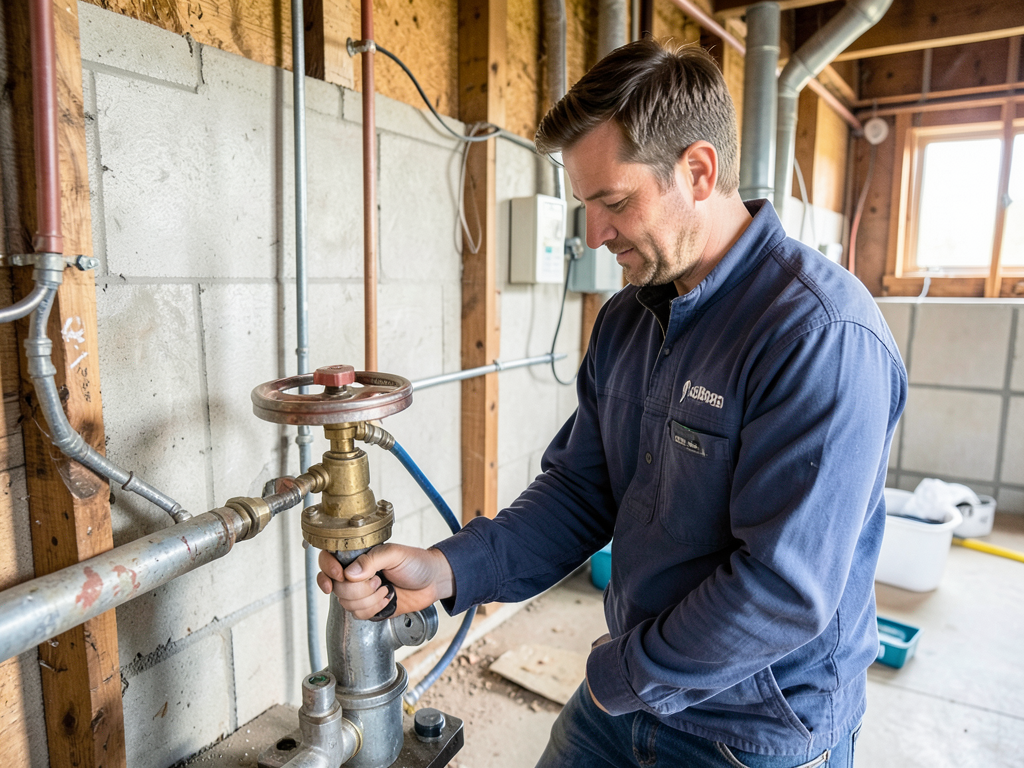
How to Locate Your Main Water Shut Off Valve in an Emergency (Tips for SoBro Residents)
Water gushing from a burst pipe can flood your SoBro home in minutes. Knowing exactly where your main water shut off valve is located could save you thousands in damage. In this guide we’ll show you how to find it fast in Indianapolis homes and what to do once you turn it off. Benefits of Water Softeners.
The average water line in Indianapolis sits about 4 to 5 feet underground to prevent freezing during our harsh winters. That depth means your shut off valve is almost always inside your home rather than buried in the yard. Let’s find yours before an emergency strikes.. Read more about Safe Water Heater Venting Inspections for Older Homes in SoBro.
Emergency Action: How to Stop a Leak Right Now
If water is spraying or pooling right now do not wait. Go to your main shut off valve and turn it clockwise until it stops. If it’s a ball valve (lever handle) turn the lever perpendicular to the pipe. If you cannot find it or the valve is stuck call (317) 688-8848 immediately for emergency service.
Warning: Never force a corroded valve. Many Indianapolis homes built before 1980 have galvanized steel valves that can break if forced. If the handle feels gritty or stuck leave it and call a professional.
Quick Test: Once the valve is off open a sink faucet on the lowest level of your home. If no water comes out you have successfully isolated your home from the water supply.
Common Locations in Indianapolis Homes
Indianapolis architecture varies by neighborhood and age. Here is where to look based on your home type:
| Home Type | Typical Location | Visual Clues |
|---|---|---|
| Basement Home | Near front foundation wall or water heater | Red or blue handle on 3/4″ pipe |
| Crawl Space | Front wall near where main line enters | Often behind an access panel |
| Slab-on-grade | Utility closet or laundry room | May be behind drywall access |
| Historic (pre-1950) | Basement near floor drain | Often a gate valve with round handle |
SoBro homes built in the 1920s through 1940s often have full basements with the main valve near the front wall where the water line enters. Post-war ranches in nearby Meridian-Kessler may have slab foundations with valves in utility closets.
Identifying Your Valve Type
There are two main types of residential shut off valves. Knowing which you have helps you operate it correctly.
| Valve Type | Handle Appearance | How to Operate | Lifespan |
|---|---|---|---|
| Gate Valve | Round wheel handle | Turn clockwise several rotations | 15-20 years (galvanized) |
| Ball Valve | Lever handle (1/4 turn) | Turn lever 90 degrees | 25+ years (brass/steel) |
Gate valves were standard in Indianapolis homes built before 1980. They are prone to mineral buildup from our hard water and can seize over time. Ball valves are more reliable and are now required by the Indianapolis plumbing code for main shut offs. Reliable Sump Pump Installation in Fishers to Keep Your Basement Dry.
The Street-Side Shut Off (Citizens Energy Group)
There is a second shut off valve outside your home in a buried meter pit. This is the city side valve maintained by Citizens Energy Group. It is not for homeowner use except in emergencies when the indoor valve fails.
The curb stop is typically 4 to 5 feet underground and requires a meter key to operate. Turning it without authorization can result in fines. If you must use it because your indoor valve is broken call Citizens Energy Group at (317) 924-3311 first.
Pro Tip: In SoBro’s older neighborhoods like Fletcher Place the meter pits may be buried under grass or landscaping. Look for a small round cover about 6 inches in diameter near the front curb.
What to Do If Your Valve is Stuck or Leaking
Older Indianapolis homes often have valves that have not been operated in years. If your valve is stuck do not force it. Here are your options:
- Apply penetrating oil around the stem and wait 15 minutes
- Use a strap wrench for better grip without damaging the handle
- Call a licensed plumber to replace the valve before it fails
If the valve is leaking at the stem that is a sign the packing nut needs tightening or the valve needs replacement. A leaking main valve can waste hundreds of gallons per month and cause water pressure issues.
According to the International Plumbing Code IPC Section 604.5 all main shut off valves must be accessible and operable without special tools. If yours is behind drywall or buried in clutter it is not up to code.
Testing Your Valve and Creating an Emergency Plan
Do not wait for a burst pipe to find out your valve does not work. Test it once per year:
- Turn the valve off and run a sink for 30 seconds
- Confirm water stops completely
- Turn it back on and check for leaks
Keep a waterproof tag on the valve with the words “Main Water Shut Off” and your emergency contact number. Show all household members where it is and how to operate it.
Store these items nearby in a labeled waterproof box:
- Water meter key (available at hardware stores)
- Adjustable wrench
- Flashlight with fresh batteries
- Emergency plumber contact card
Seasonal Considerations for Indianapolis Winters
Indianapolis experiences freeze-thaw cycles that can cause pipes to expand and contract. In January 2023 a cold snap caused over 200 burst pipe calls across Marion County. Homes with uninsulated crawl spaces or rim joists are especially vulnerable.. Read more about The Real Cost of Replacing Cast Iron Pipes in Your Broad Ripple Fixer Upper.
If you plan to be away during winter set your thermostat to at least 55°F and consider installing a smart water sensor near your main valve. These sensors can alert you to leaks before major damage occurs.
For SoBro’s historic homes with galvanized pipes consider a whole home repipe if your valve is original. Modern PEX piping resists freezing and is more durable than steel in our mineral-rich water.
Frequently Asked Questions
How do I know if my main valve is fully closed?
Open a sink faucet on the lowest level of your home. If no water comes out the valve is fully closed. If you still hear water flowing you may have a secondary supply line or the valve is not fully shut.
Can I replace my main shut off valve myself?
Main valve replacement requires cutting into your home’s main water line and must comply with the Indianapolis plumbing code. It is a job for a licensed plumber. DIY replacement can lead to code violations and insurance issues.. Read more about The Essential Plumbing Maintenance Checklist for New Homeowners in Bargersville.
What if my valve is behind drywall?
That is a code violation. Valves must be accessible without tools. A plumber can install an access panel to bring it up to code.
How much does it cost to replace a main shut off valve?
Replacement typically costs $350 to $600 depending on valve type and accessibility. Ball valves are more expensive but last longer than gate valves.
Should I turn off my main valve when I go on vacation?
Yes if you will be away more than 48 hours. This prevents catastrophic damage if a supply line fails while you are gone.
Protect Your Home Before Disaster Strikes
Finding your main water shut off valve takes five minutes and could save you thousands in repairs. If your valve is old stuck or leaking do not wait for an emergency. Call (317) 688-8848 today to schedule an inspection. Our licensed plumbers serve SoBro and all of Indianapolis with fast reliable service.
Pick up the phone and call (317) 688-8848 before the next storm hits. We will locate test and if needed replace your main valve to give you peace of mind.
{
“@context”: “https://schema.org”,
“@type”: “BlogPosting”,
“headline”: “How to Locate Your Main Water Shut Off Valve in an Emergency (Tips for SoBro Residents)”,
“description”: “Find your main water shut off valve fast in SoBro. Learn locations, valve types, and emergency steps to prevent costly water damage in Indianapolis.”,
“wordCount”: 1262,
“datePublished”: “2026-04-08T08:49:00.000Z”,
“dateModified”: “2026-04-08T08:49:00.000Z”,
“inLanguage”: “en-US”,
“mainEntityOfPage”: {
“@type”: “WebPage”,
“@id”: “https://keystoneplumbingindianapolis.com”
},
“publisher”: {
“@type”: “LocalBusiness”,
“name”: “Keystone Plumbing Indianapolis”,
“url”: “https://keystoneplumbingindianapolis.com”
},
“author”: {
“@type”: “Organization”,
“name”: “Keystone Plumbing Indianapolis”,
“url”: “https://keystoneplumbingindianapolis.com”
},
“image”: {
“@type”: “ImageObject”,
“url”: “https://keystoneplumbingindianapolis.com/wp-content/uploads/2026/03/how-to-locate-your-main-water-shut-off-valve-in-an-1.png”
}
}
{
“@context”: “https://schema.org”,
“@type”: “Plumber”,
“name”: “Keystone Plumbing Indianapolis”,
“url”: “https://keystoneplumbingindianapolis.com”,
“address”: {
“@type”: “PostalAddress”,
“addressLocality”: “Indianapolis”
},
“areaServed”: {
“@type”: “City”,
“name”: “Indianapolis”
}
}
{
“@context”: “https://schema.org”,
“@type”: “FAQPage”,
“mainEntity”: [
{
“@type”: “Question”,
“name”: “How do I know if my main valve is fully closed?”,
“acceptedAnswer”: {
“@type”: “Answer”,
“text”: “Open a sink faucet on the lowest level of your home. If no water comes out the valve is fully closed. If you still hear water flowing you may have a secondary supply line or the valve is not fully shut.”
}
},
{
“@type”: “Question”,
“name”: “Can I replace my main shut off valve myself?”,
“acceptedAnswer”: {
“@type”: “Answer”,
“text”: “Main valve replacement requires cutting into your home’s main water line and must comply with the Indianapolis plumbing code. It is a job for a licensed plumber. DIY replacement can lead to code violations and insurance issues.”
}
},
{
“@type”: “Question”,
“name”: “What if my valve is behind drywall?”,
“acceptedAnswer”: {
“@type”: “Answer”,
“text”: “That is a code violation. Valves must be accessible without tools. A plumber can install an access panel to bring it up to code.”
}
},
{
“@type”: “Question”,
“name”: “How much does it cost to replace a main shut off valve?”,
“acceptedAnswer”: {
“@type”: “Answer”,
“text”: “Replacement typically costs $350 to $600 depending on valve type and accessibility. Ball valves are more expensive but last longer than gate valves.”
}
},
{
“@type”: “Question”,
“name”: “Should I turn off my main valve when I go on vacation?”,
“acceptedAnswer”: {
“@type”: “Answer”,
“text”: “Yes if you will be away more than 48 hours. This prevents catastrophic damage if a supply line fails while you are gone.”
}
}
]
}
{
“@context”: “https://schema.org”,
“@type”: “BreadcrumbList”,
“itemListElement”: [
{
“@type”: “ListItem”,
“position”: 1,
“name”: “Home”,
“item”: “https://keystoneplumbingindianapolis.com”
},
{
“@type”: “ListItem”,
“position”: 2,
“name”: “Blog”,
“item”: “https://keystoneplumbingindianapolis.com/blog”
},
{
“@type”: “ListItem”,
“position”: 3,
“name”: “How to Locate Your Main Water Shut Off Valve in an Emergency (Tips for SoBro Residents)”
}
]
}
{
“@context”: “https://schema.org”,
“@type”: “Service”,
“serviceType”: “Plumbing”,
“provider”: {
“@type”: “LocalBusiness”,
“name”: “Keystone Plumbing Indianapolis”,
“url”: “https://keystoneplumbingindianapolis.com”
},
“areaServed”: {
“@type”: “City”,
“name”: “Indianapolis”
},
“description”: “Find your main water shut off valve fast in SoBro. Learn locations, valve types, and emergency steps to prevent costly water damage in Indianapolis.”
}