
Removing Hard Water Scale from Your Showerheads and Faucets in Cumberland
White crusty buildup on your showerheads and faucets is more than just an eyesore. In Cumberland homes, this calcium carbonate scale reduces water pressure and damages fixtures over time. The limestone-rich groundwater that feeds Indianapolis’s water system leaves mineral deposits that return within weeks of cleaning. You can restore flow and shine to your fixtures using simple household items, but understanding the local water chemistry helps you prevent future buildup. Benefits of Water Softeners.
Indianapolis’s water hardness averages 15-20 grains per gallon according to Citizens Energy Group data. That means every gallon of water contains 15-20 grains of dissolved calcium and magnesium. When this water evaporates on your fixtures, it leaves behind the white chalky residue you see. The same minerals that create that buildup also shorten the life of your water heater and dishwasher. Cleaning the scale restores function, but treating the water source prevents the problem from returning. Citizens Energy Group water quality reports.
- Gather Your Supplies
You need white vinegar, a plastic bag, rubber bands, an old toothbrush, and microfiber cloths. For stubborn buildup, have a small wrench and replacement aerators ready.
- Remove the Aerator
Unscrew the small screen at the faucet tip. Soak it in vinegar for 30 minutes to dissolve mineral deposits inside the tiny holes.
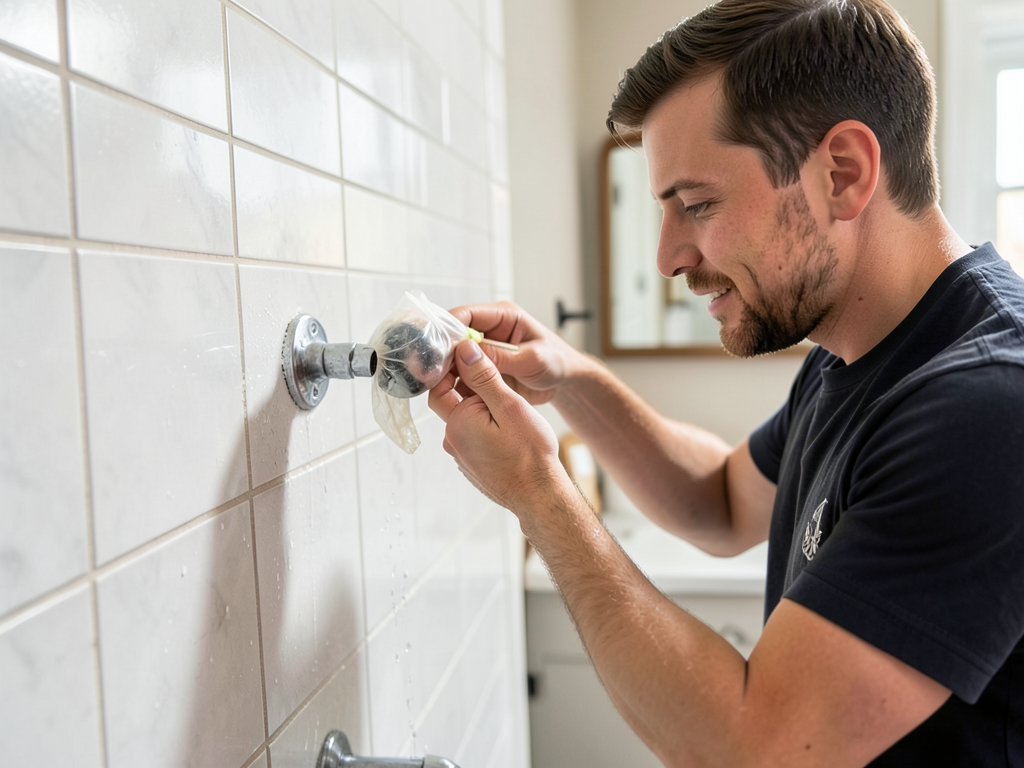
- Bag the Fixture
Fill a plastic bag with vinegar and secure it over the showerhead or faucet using rubber bands. Ensure the crusty areas are fully submerged.
- Soak and Scrub
Let the fixture soak for one hour. Remove the bag and scrub with the toothbrush to remove loosened scale. Rinse thoroughly with clean water.
- Polish and Protect
Dry the fixture with a microfiber cloth. Apply a thin coat of car wax to create a barrier that slows future buildup.
Understanding Indianapolis Water Chemistry
The white scale on your fixtures is calcium carbonate, the same compound that forms limestone caves. Indianapolis sits atop limestone bedrock that dissolves into the groundwater. When this hard water passes through your plumbing and evaporates on surfaces, it leaves mineral deposits behind. The problem is worse in Cumberland because many homes have older galvanized pipes that accumulate scale inside, reducing water flow before it even reaches your fixtures.
Citizens Energy Group tests show Cumberland’s water hardness ranges from 180 to 220 parts per million. That translates to 10.5 to 13 grains per gallon. For comparison, water under 3 grains per gallon is considered soft. This extreme hardness means your fixtures need cleaning every two to three months. The same minerals that create scale also interfere with soap lathering and leave spots on dishes and glassware. Wet Spots in Yard.
Cleaning Different Faucet Finishes Safely
Not all fixtures can handle the same cleaning methods. Chrome and stainless steel tolerate vinegar well. However, specialty finishes require gentler treatment. Matte black, oil-rubbed bronze, and brushed nickel often have protective coatings that vinegar can damage. Test any cleaner on an inconspicuous area first.
For delicate finishes, use diluted vinegar (one part vinegar to two parts water) and limit soaking time to 15 minutes. Never use abrasive scrubbers on PVD-coated fixtures. Instead, use a soft cloth with the diluted solution. If you notice the finish dulling or peeling, stop immediately and call a plumber. Sometimes the damage isn’t from the cleaning but from years of mineral buildup etching the surface.
The Aerator: The Hidden Source of Low Pressure
The small screen at your faucet tip, called an aerator, often harbors the worst buildup. Water passes through tiny holes that get clogged with calcium deposits. Even if the faucet body looks clean, a clogged aerator can reduce flow by 50% or more. Remove it by unscrewing counterclockwise. If it’s stuck, use pliers with a cloth to protect the finish.
Once removed, separate the aerator parts and soak them in vinegar. Use a pin to clear individual holes if needed. While disassembled, check the valve cartridge inside the faucet handle. If you see white buildup there, the problem extends beyond surface scale. This internal corrosion requires professional cleaning or replacement to restore proper function.
Showerhead Spray Nozzles: The Calcium Clog Culprit
Modern showerheads have rubber nozzles that become blocked with mineral deposits. You’ll notice this as uneven spray patterns or jets that barely trickle. The baggy method works well here, but you need to address the nozzles directly. After soaking, use your fingernail or a plastic toothpick to gently clear each nozzle.
Some showerheads have removable faces that allow deeper cleaning. If yours does, take it apart carefully and soak all components. Pay attention to the pivot ball that allows angle adjustment. Mineral buildup here causes stiffness and can eventually freeze the showerhead in one position. A drop of silicone lubricant after cleaning keeps movement smooth.
When DIY Cleaning Isn’t Enough
Sometimes the scale goes beyond surface buildup. If you’ve cleaned your fixtures repeatedly but pressure remains low, the problem might be inside your pipes. Galvanized steel pipes common in homes built before 1980 accumulate scale on the inside walls. This internal corrosion reduces the effective pipe diameter, limiting water flow to all fixtures.. Read more about Why Your Brownsburg Well Pressure Tank Might Be Failing (And What to Do Next).
Signs you need professional help include: multiple fixtures with low pressure, banging pipes when you turn water on or off, rusty water from hot taps, or visible leaks at joints. These indicate pipe deterioration that cleaning won’t fix. A plumber can use a camera to inspect your pipes and recommend solutions ranging from pipe cleaning to partial or complete replacement. Sewer Camera Inspections in Pike Township to Find the Root of Your Problem.
Preventing Future Scale Buildup
Cleaning removes existing scale but doesn’t stop new deposits from forming. The most effective prevention is installing a water softener. These systems exchange calcium and magnesium ions for sodium or potassium ions before water enters your home. Softened water eliminates scale formation and extends the life of your water heater, dishwasher, and washing machine.
For Cumberland homes, a standard ion-exchange softener handles the local water hardness effectively. The system needs monthly salt refills and annual maintenance. Electronic descalers offer a salt-free alternative that changes mineral structure to prevent adhesion, though results vary with extremely hard water. Whichever method you choose, treating the water at the source costs less than repeatedly replacing damaged fixtures and appliances.. Read more about Standard vs Comfort Height Toilets for Aging in Place in Lawrence.
Long-Term Cost Savings from Water Treatment
Hard water damage costs Indianapolis homeowners hundreds of dollars annually in hidden expenses. Scale buildup in your water heater reduces efficiency by up to 30%, increasing energy bills. It also shortens appliance life by several years. The American Water Works Association estimates hard water damage costs the average household $800 to $1,200 per year in increased energy use, detergent costs, and premature replacement of water-using appliances. American Water Works Association research.
Installing a water softener typically costs $1,500 to $2,500 depending on home size and system features. For a Cumberland home, the system pays for itself in three to five years through energy savings and extended appliance life. The immediate benefit is eliminating the need for monthly fixture cleaning and enjoying spot-free dishes and softer skin and hair.
Local Water Quality Resources
Citizens Energy Group provides annual water quality reports for all Indianapolis service areas, including Cumberland. These reports detail hardness levels, mineral content, and any treatment processes. You can request a free test kit to measure your home’s specific water hardness. Many hardware stores also sell simple test strips that give instant readings.
For homes with private wells, testing is even more critical. Well water in Johnson County often exceeds municipal hardness levels and may contain additional minerals or contaminants. Annual testing ensures your treatment system works correctly and your water remains safe for consumption. Local plumbing companies offer comprehensive water quality analysis that checks for hardness, pH balance, iron content, and bacteria.
Professional Cleaning Services
Some homeowners prefer professional cleaning for delicate fixtures or severe buildup. Plumbers use stronger descaling agents and specialized tools to restore fixtures without damage. They can also identify when scale indicates deeper plumbing problems. Professional cleaning costs $150 to $300 for a whole-house fixture restoration, often including a water quality assessment.
Commercial properties in Cumberland with extensive plumbing systems benefit from scheduled maintenance cleaning. Hotels, restaurants, and apartment complexes face scale problems that affect guest satisfaction and equipment operation. Professional service contracts include regular inspections and cleaning, preventing emergency repairs and maintaining consistent water pressure throughout the building.
Environmental Considerations
Traditional salt-based water softeners discharge brine into the wastewater system. Some municipalities restrict these systems due to environmental concerns. Indianapolis currently allows them but encourages water-efficient models. Salt-free alternatives use no chemicals but may be less effective in extreme hardness conditions like Cumberland’s.
Regardless of your choice, treating hard water reduces your environmental footprint. Scale-free appliances use less energy and detergent. You’ll use fewer harsh chemical cleaners on fixtures. Softened water also means less soap and shampoo consumption, reducing the chemicals entering the water system through drains.
DIY vs Professional Solutions
Regular fixture cleaning is a simple DIY task that saves money. However, water treatment system installation requires professional expertise. Incorrect softener installation can damage your plumbing or create water quality issues. Licensed plumbers ensure proper sizing, installation, and integration with your home’s plumbing system. Reliable Sump Pump Installation in Fishers to Keep Your Basement Dry.
Consider your comfort level and the severity of your hard water problems. If you’re handy and the issues are limited to surface scale, DIY cleaning works well. If you’re dealing with low pressure throughout the house, frequent appliance problems, or want permanent scale prevention, professional assessment and installation make more sense.
Quick Fixes for Emergency Situations
Sometimes you need immediate results before guests arrive or when selling your home. For a quick shine, use a commercial lime scale remover according to label directions. These products work faster than vinegar but cost more and have stronger fumes. Always ventilate the area and wear gloves when using chemical cleaners. Quick Garbage Disposal Repair in Lawrence to Get Your Kitchen Back in Order.
For shower doors with severe hard water spots, a paste of baking soda and vinegar can remove buildup that regular cleaning misses. Apply the paste, let it sit for 15 minutes, then scrub with a non-abrasive sponge. Rinse thoroughly and squeegee dry to prevent new spots from forming.
Understanding Your Plumbing System
Knowing your home’s plumbing helps you make informed decisions about hard water treatment. Many Cumberland homes have a mix of pipe materials due to repairs over the years. Copper pipes resist scale better than galvanized steel but still accumulate mineral deposits over decades.
Locate your main water shutoff valve and identify the pipe material feeding your home. This information helps plumbers recommend appropriate treatment systems and identify potential problem areas. If you have a water meter, note its location and check for any existing treatment equipment already installed.
Seasonal Considerations
Hard water problems can worsen seasonally. In winter, cold water holds more dissolved minerals, potentially increasing scale formation. Summer’s higher water usage means more mineral-laden water passing through your fixtures. Indiana’s freeze-thaw cycles also stress plumbing systems, potentially creating small leaks that allow air in, accelerating corrosion.
Schedule deep cleaning and maintenance in spring and fall. These shoulder seasons provide good timing for plumbing inspections before summer’s heavy usage or winter’s freezing temperatures. Regular maintenance prevents emergency repairs during extreme weather when plumbers are busiest.
Water Heater Impact
Your water heater suffers the most from hard water damage. Scale accumulates on heating elements and the tank bottom, forcing the unit to work harder and reducing efficiency. In gas heaters, scale acts as insulation between the burner and water, wasting energy. Electric heaters develop scale on elements that can cause them to burn out prematurely.
Flushing your water heater annually removes sediment and scale. For homes with extremely hard water, consider a tankless water heater. These units heat water on demand and have components that are easier to clean or replace than a traditional tank. The initial cost is higher, but the longevity and efficiency often offset the investment in hard water areas.
Commercial Applications
Businesses in Cumberland face unique hard water challenges. Restaurants deal with scale in coffee makers, dishwashers, and ice machines. Hotels manage scale on hundreds of showerheads and faucets. Car washes require spot-free water for vehicle cleaning. Each application needs specific treatment solutions based on water usage patterns and local hardness levels.
Commercial water treatment often involves larger, more sophisticated systems than residential units. These may include multiple treatment stages, monitoring systems, and automated regeneration cycles. The investment pays off through reduced equipment maintenance, improved product quality, and better customer satisfaction.
Future-Proofing Your Home
As homes age, hard water damage compounds. Pipes narrow from internal scale buildup, joints weaken, and appliances work harder. Planning for future upgrades helps you avoid emergency replacements. When remodeling bathrooms or kitchens, consider installing fixtures designed for hard water areas with smooth surfaces that resist scale adhesion.
Modern fixtures often include antimicrobial coatings that also repel mineral deposits. Some high-end models feature self-cleaning nozzles that reduce maintenance. While these cost more upfront, they save money and hassle over time in hard water regions like Cumberland.
Health and Safety Considerations
Hard water minerals aren’t harmful to drink, but they can affect your health indirectly. Scale buildup in showerheads can harbor bacteria, including Legionella, which causes Legionnaires’ disease. The warm, moist environment inside clogged nozzles provides ideal conditions for bacterial growth.
Regular cleaning eliminates this risk. If you notice black or pink discoloration around fixture bases, this indicates bacterial growth that requires thorough cleaning and possibly professional treatment. Always use proper ventilation when cleaning with chemicals and keep cleaning products away from children and pets.
Getting Professional Help
When DIY methods fail or you’re dealing with widespread hard water damage, professional plumbers provide comprehensive solutions. They can test your water, inspect your plumbing system, and recommend treatment options tailored to your home’s specific needs. Professional installation ensures your water treatment system works correctly and efficiently.
Look for plumbers with experience in hard water treatment and good references from local customers. Ask about warranties on both equipment and installation. A reputable company will provide a written estimate and explain all your options, from simple fixture cleaning to whole-house water treatment systems.
Hard water scale doesn’t have to be a constant battle. With the right cleaning techniques and prevention strategies, you can keep your Cumberland home’s fixtures looking great and functioning properly. Whether you choose DIY maintenance or professional solutions, addressing hard water problems early prevents costly damage and improves your daily comfort.
Frequently Asked Questions
How often should I clean hard water scale from my showerheads?
Clean showerheads every two to three months in Cumberland due to the extreme local water hardness. More frequent cleaning may be needed if you notice reduced water pressure or visible white buildup.
Can hard water damage my plumbing permanently?
Yes. Over time, hard water scale narrows pipes from the inside, reducing water flow and pressure. Galvanized pipes are especially vulnerable and may need replacement after decades of mineral buildup.
Is vinegar safe for all faucet finishes?
No. While vinegar works well on chrome and stainless steel, it can damage specialty finishes like matte black, oil-rubbed bronze, and brushed nickel. Always test on an inconspicuous area first or use diluted vinegar for delicate finishes.
What’s the most effective way to prevent hard water scale?
Installing a water softener is the most effective prevention method. These systems remove calcium and magnesium before water enters your home, eliminating scale formation and protecting all your plumbing and appliances.
How do I know if my water is hard enough to need treatment?
Visible white scale on fixtures, reduced water pressure, spots on dishes, and soap that doesn’t lather well are all signs of hard water. Citizens Energy Group reports Cumberland’s water at 15-20 grains per gallon, which is considered very hard.
Ready to stop fighting hard water scale in your Cumberland home? Call (317) 688-8848 today for a professional water quality assessment and learn about treatment options that will save you time and money. Our experienced team understands Indianapolis’s unique water challenges and can recommend the perfect solution for your home.
You may also find this helpful. Pellets or Crystals (Picking the Right Salt for Your Zionsville Water Softener).
You may also find this helpful. Moen vs Delta vs Kohler (Which Kitchen Faucet Lasts Longest in Greenwood?).
You may also find this helpful. Adding a Utility Sink to Your Pike Township Laundry Room (Everything You Need to Know).
{
“@context”: “https://schema.org”,
“@type”: “BlogPosting”,
“headline”: “Removing Hard Water Scale from Your Showerheads and Faucets in Cumberland”,
“description”: “Hard water leaves white crust on your showerheads and faucets. Learn the exact steps to clean calcium buildup and restore water flow in your Cumberland home.”,
“wordCount”: 2700,
“datePublished”: “2026-04-09T08:48:00.000Z”,
“dateModified”: “2026-04-09T08:48:00.000Z”,
“inLanguage”: “en-US”,
“mainEntityOfPage”: {
“@type”: “WebPage”,
“@id”: “https://keystoneplumbingindianapolis.com”
},
“publisher”: {
“@type”: “LocalBusiness”,
“name”: “Keystone Plumbing Indianapolis”,
“url”: “https://keystoneplumbingindianapolis.com”
},
“author”: {
“@type”: “Organization”,
“name”: “Keystone Plumbing Indianapolis”,
“url”: “https://keystoneplumbingindianapolis.com”
},
“image”: {
“@type”: “ImageObject”,
“url”: “https://keystoneplumbingindianapolis.com/wp-content/uploads/2026/03/removing-hard-water-scale-from-your-showerheads-an-1.png”
}
}
{
“@context”: “https://schema.org”,
“@type”: “Plumber”,
“name”: “Keystone Plumbing Indianapolis”,
“url”: “https://keystoneplumbingindianapolis.com”,
“address”: {
“@type”: “PostalAddress”,
“addressLocality”: “Indianapolis”
},
“areaServed”: {
“@type”: “City”,
“name”: “Indianapolis”
}
}
{
“@context”: “https://schema.org”,
“@type”: “FAQPage”,
“mainEntity”: [
{
“@type”: “Question”,
“name”: “How often should I clean hard water scale from my showerheads?”,
“acceptedAnswer”: {
“@type”: “Answer”,
“text”: “Clean showerheads every two to three months in Cumberland due to the extreme local water hardness. More frequent cleaning may be needed if you notice reduced water pressure or visible white buildup.”
}
},
{
“@type”: “Question”,
“name”: “Can hard water damage my plumbing permanently?”,
“acceptedAnswer”: {
“@type”: “Answer”,
“text”: “Yes. Over time, hard water scale narrows pipes from the inside, reducing water flow and pressure. Galvanized pipes are especially vulnerable and may need replacement after decades of mineral buildup.”
}
},
{
“@type”: “Question”,
“name”: “Is vinegar safe for all faucet finishes?”,
“acceptedAnswer”: {
“@type”: “Answer”,
“text”: “No. While vinegar works well on chrome and stainless steel, it can damage specialty finishes like matte black, oil-rubbed bronze, and brushed nickel. Always test on an inconspicuous area first or use diluted vinegar for delicate finishes.”
}
},
{
“@type”: “Question”,
“name”: “What’s the most effective way to prevent hard water scale?”,
“acceptedAnswer”: {
“@type”: “Answer”,
“text”: “Installing a water softener is the most effective prevention method. These systems remove calcium and magnesium before water enters your home, eliminating scale formation and protecting all your plumbing and appliances.”
}
},
{
“@type”: “Question”,
“name”: “How do I know if my water is hard enough to need treatment?”,
“acceptedAnswer”: {
“@type”: “Answer”,
“text”: “Visible white scale on fixtures, reduced water pressure, spots on dishes, and soap that doesn’t lather well are all signs of hard water. Citizens Energy Group reports Cumberland’s water at 15-20 grains per gallon, which is considered very hard.”
}
}
]
}
{
“@context”: “https://schema.org”,
“@type”: “HowTo”,
“name”: “How to Remove Hard Water Scale”,
“step”: [
{
“@type”: “HowToStep”,
“position”: 1,
“name”: “Gather Your Supplies”,
“text”: “You need white vinegar, a plastic bag, rubber bands, an old toothbrush, and microfiber cloths. For stubborn buildup, have a small wrench and replacement aerators ready.”
},
{
“@type”: “HowToStep”,
“position”: 2,
“name”: “Remove the Aerator”,
“text”: “Unscrew the small screen at the faucet tip. Soak it in vinegar for 30 minutes to dissolve mineral deposits inside the tiny holes.”
},
{
“@type”: “HowToStep”,
“position”: 3,
“name”: “Bag the Fixture”,
“text”: “Fill a plastic bag with vinegar and secure it over the showerhead or faucet using rubber bands. Ensure the crusty areas are fully submerged.”
},
{
“@type”: “HowToStep”,
“position”: 4,
“name”: “Soak and Scrub”,
“text”: “Let the fixture soak for one hour. Remove the bag and scrub with the toothbrush to remove loosened scale. Rinse thoroughly with clean water.”
},
{
“@type”: “HowToStep”,
“position”: 5,
“name”: “Polish and Protect”,
“text”: “Dry the fixture with a microfiber cloth. Apply a thin coat of car wax to create a barrier that slows future buildup.”
}
],
“image”: “https://keystoneplumbingindianapolis.com/wp-content/uploads/2026/03/removing-hard-water-scale-from-your-showerheads-an-1.png”
}
{
“@context”: “https://schema.org”,
“@type”: “BreadcrumbList”,
“itemListElement”: [
{
“@type”: “ListItem”,
“position”: 1,
“name”: “Home”,
“item”: “https://keystoneplumbingindianapolis.com”
},
{
“@type”: “ListItem”,
“position”: 2,
“name”: “Blog”,
“item”: “https://keystoneplumbingindianapolis.com/blog”
},
{
“@type”: “ListItem”,
“position”: 3,
“name”: “Removing Hard Water Scale from Your Showerheads and Faucets in Cumberland”
}
]
}
{
“@context”: “https://schema.org”,
“@type”: “Service”,
“serviceType”: “Plumbing”,
“provider”: {
“@type”: “LocalBusiness”,
“name”: “Keystone Plumbing Indianapolis”,
“url”: “https://keystoneplumbingindianapolis.com”
},
“areaServed”: {
“@type”: “City”,
“name”: “Indianapolis”
},
“description”: “Hard water leaves white crust on your showerheads and faucets. Learn the exact steps to clean calcium buildup and restore water flow in your Cumberland home.”
}