
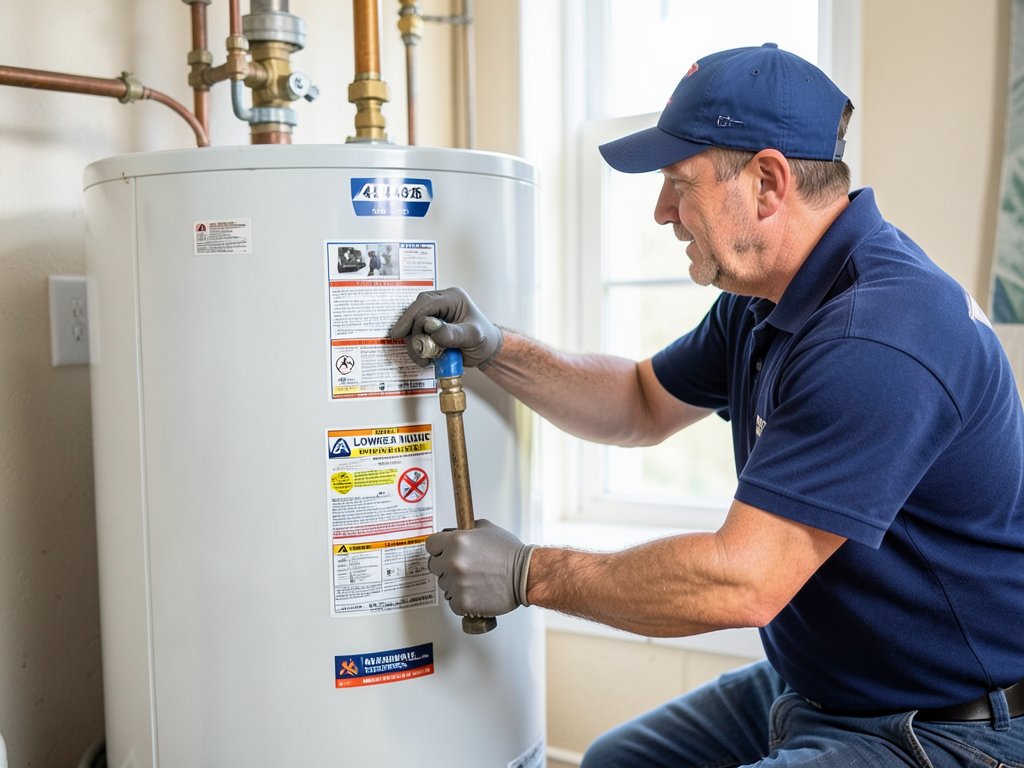
Why Lawrence Homeowners Need an Expansion Tank on Their Water Heater
When water heats up inside your tank it expands by about 2-3%. In older homes that extra volume could push back into the main water line. Today’s homes have backflow preventers and pressure reducing valves which create a “closed loop” system. Without somewhere for that extra water to go the pressure builds until something breaks. That is where an expansion tank comes in. It gives the heated water a place to expand safely keeping your water heater and plumbing fixtures from failing early. Benefits of Water Softeners.
How Thermal Expansion Works in Your Home
Water is nearly incompressible. When you heat a gallon of water by 40-50 degrees Fahrenheit it grows by roughly 0.03 gallons. In a closed system that extra volume has nowhere to escape. Pressure spikes can climb from a normal 50-60 PSI to over 150 PSI in minutes. That kind of force is enough to rupture pipes blow out seals and cause your temperature and pressure relief valve to leak constantly.. Read more about How a Hot Water Recirculating Pump Can Give You Instant Heat in Your Traders Point Home.
Closed Loop vs Open Loop Systems
Older Indianapolis neighborhoods like parts of Lawrence often had open systems where expanding water could push back into the city main. Modern homes have check valves or backflow preventers installed at the meter. These protect the city water supply but trap expanding water in your home. That trapped pressure is why expansion tanks became code required for new water heater installations in Indiana. Indiana Residential Code Section 607.3.
Lawrence’s Unique Plumbing Infrastructure
Lawrence Indiana sits in a transition zone where some blocks still have older infrastructure and others have been updated with modern meters and valves. Many homes in the 46216 and 46226 zip codes were built between 1970 and 2000 when the city was expanding rapidly. These homes often have galvanized steel pipes that are now nearing the end of their service life. The Franklin Road corridor particularly around Pendleton Pike has seen significant infrastructure upgrades in recent years including new water mains and backflow preventer installations. City of Lawrence Indiana.
The Fort Harrison State Park area presents unique challenges because many homes there were converted from military housing to civilian use. These conversions sometimes retained older plumbing systems that predate modern pressure regulation requirements. The Lawrence Community Park neighborhood has a mix of home ages from the 1960s through new construction making it essential to verify whether your specific property has a closed system.
Signs Your Expansion Tank Has Failed
A failing tank usually shows up in one of three ways. First your T&P relief valve may drip constantly even when the heater is off. Second you might hear a “thumping” sound when hot water is running as the air cushion inside the tank collapses. Third the tank itself may develop a slow leak at the threaded connection. If you tap the tank with a screwdriver and it sounds solid instead of hollow it is waterlogged and needs replacement.
Indiana Plumbing Code Requirements
Indiana Residential Code Section 607.3 requires thermal expansion control for all new or replacement water heaters in closed systems. The code applies to homes with a check valve pressure reducing valve or backflow preventer on the cold water line. Local inspectors in Marion County and surrounding areas enforce this rule during permit inspections. Skipping the tank may pass at first but can lead to failed inspections or denied insurance claims if damage occurs.
Lawrence sits in a transition zone where some blocks still have older infrastructure and others have been updated with modern meters and valves. That mix means two homes on the same street may have different requirements. A licensed plumber can check your service line and tell you exactly what applies to your property.
Benefits of Installing an Expansion Tank
Adding a tank protects more than just your water heater. It prevents “water hammer” that can loosen joints and damage valves throughout your home. It extends the life of your water heater by reducing thermal stress on the tank lining. It also keeps your T&P valve from cycling open and wasting water. In areas with hard water like Indianapolis the savings add up because you avoid sediment build-up caused by repeated small leaks.
Choosing the Right Size
Tanks come in 2-gallon and 5-gallon sizes. A 2-gallon model works for most small households with a 40- or 50-gallon heater. Larger families or homes with 75-gallon heaters need the 5-gallon version. The tank must be pressurized to match your home’s water pressure using a standard Schrader valve before installation. A plumber will check your pressure with a gauge and charge the tank accordingly. Reliable Sump Pump Installation in Fishers to Keep Your Basement Dry.
Installation and Maintenance Tips
The tank mounts on the cold water line near the inlet to the water heater. It contains a rubber bladder that separates an air chamber from the water. Over time that bladder can fail. Testing is simple: shut off the water heater open a hot tap to relieve pressure then tap the tank. A hollow sound means it is still working. A solid sound means the bladder has failed and the tank needs replacement.
Annual maintenance includes checking the pre-charge pressure and looking for external corrosion. In Lawrence’s climate with seasonal temperature swings it is smart to inspect the tank each spring when you check your sump pump and outdoor faucets.
Cost Savings and Long-Term Protection
Replacing a water heater costs $1,200 to $2,500 in 2026. An expansion tank costs $150 to $300 installed. The small upfront cost can save you from flooding property damage and early heater replacement. Insurance companies may deny claims if they find no expansion control in a closed system that caused the damage.
Lawrence homeowners also benefit from the area’s relatively new infrastructure. Many homes built after the early 2000s already have the required backflow preventers making expansion tanks mandatory rather than optional.
Expansion Tank Size Guide for Lawrence Homes
| Water Heater Size | Household Size | Recommended Tank Size | Pre-charge Pressure |
|---|---|---|---|
| 30-50 gallons | 1-2 people | 2 gallons | 40-60 PSI |
| 40-50 gallons | 2-4 people | 2 gallons | 40-60 PSI |
| 66-75 gallons | 4-6 people | 5 gallons | 50-80 PSI |
| 80+ gallons | 6+ people | 5 gallons | 60-80 PSI |
Closed vs Open System Comparison
| System Type | Expansion Control | Common in Lawrence | Installation Date |
|---|---|---|---|
| Open System | None required | Pre-1990 homes | Before 1990 |
| Closed System | Expansion tank required | Post-1990 homes | After 1990 |
| Hybrid System | Depends on backflow preventer | Homes with recent upgrades | Variable |
Protect Your Home Today
Lawrence’s mix of older and newer homes means plumbing requirements can vary block by block. If you are not sure whether your system is closed or if your expansion tank is working now is the time to find out. A quick inspection can prevent thousands in damage and keep your water heater running years longer. Quick Garbage Disposal Repair in Lawrence to Get Your Kitchen Back in Order.
Call (317) 688-8848 today to schedule your inspection and get peace of mind that your home is protected. For more information, visit American Society of Sanitary Engineering.
{
“@context”: “https://schema.org”,
“@type”: “BlogPosting”,
“headline”: “Why Lawrence Homeowners Need an Expansion Tank on Their Water Heater”,
“description”: “Protect your Lawrence home from costly water heater damage. Learn why expansion tanks are essential for closed plumbing systems and Indiana code compliance.”,
“wordCount”: 1178,
“datePublished”: “2026-03-19T08:27:00.000Z”,
“dateModified”: “2026-03-19T08:27:00.000Z”,
“inLanguage”: “en-US”,
“mainEntityOfPage”: {
“@type”: “WebPage”,
“@id”: “https://keystoneplumbingindianapolis.com”
},
“publisher”: {
“@type”: “LocalBusiness”,
“name”: “Keystone Plumbing Indianapolis”,
“url”: “https://keystoneplumbingindianapolis.com”
},
“author”: {
“@type”: “Organization”,
“name”: “Keystone Plumbing Indianapolis”,
“url”: “https://keystoneplumbingindianapolis.com”
},
“image”: {
“@type”: “ImageObject”,
“url”: “https://keystoneplumbingindianapolis.com/wp-content/uploads/2026/03/why-lawrence-homeowners-need-an-expansion-tank-on-1.png”
}
}
{
“@context”: “https://schema.org”,
“@type”: “Plumber”,
“name”: “Keystone Plumbing Indianapolis”,
“url”: “https://keystoneplumbingindianapolis.com”,
“address”: {
“@type”: “PostalAddress”,
“addressLocality”: “Indianapolis”
},
“areaServed”: {
“@type”: “City”,
“name”: “Indianapolis”
}
}
{
“@context”: “https://schema.org”,
“@type”: “BreadcrumbList”,
“itemListElement”: [
{
“@type”: “ListItem”,
“position”: 1,
“name”: “Home”,
“item”: “https://keystoneplumbingindianapolis.com”
},
{
“@type”: “ListItem”,
“position”: 2,
“name”: “Blog”,
“item”: “https://keystoneplumbingindianapolis.com/blog”
},
{
“@type”: “ListItem”,
“position”: 3,
“name”: “Why Lawrence Homeowners Need an Expansion Tank on Their Water Heater”
}
]
}
{
“@context”: “https://schema.org”,
“@type”: “Service”,
“serviceType”: “Plumbing”,
“provider”: {
“@type”: “LocalBusiness”,
“name”: “Keystone Plumbing Indianapolis”,
“url”: “https://keystoneplumbingindianapolis.com”
},
“areaServed”: {
“@type”: “City”,
“name”: “Indianapolis”
},
“description”: “Protect your Lawrence home from costly water heater damage. Learn why expansion tanks are essential for closed plumbing systems and Indiana code compliance.”
}